Scaling Managed Services with a White Label MSP Platform
Updated on July 30, 2026, by ITarian
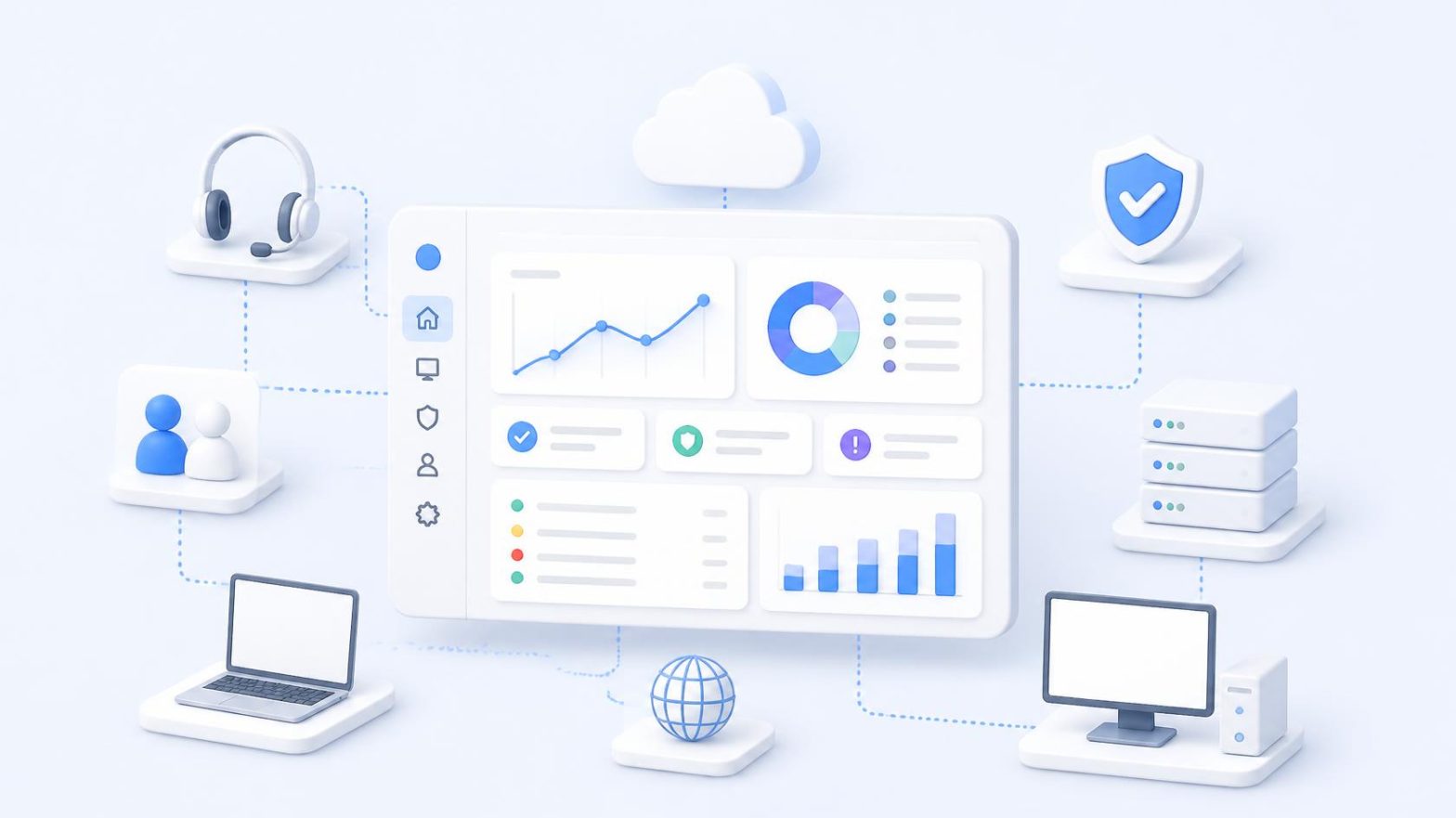
What if your Managed Service Provider (MSP) business could deliver enterprise-grade IT services under your own brand without investing years in building proprietary software? As businesses increasingly rely on outsourced IT management, the demand for comprehensive managed services continues to grow. However, building and maintaining a complete technology stack requires significant investments in development, infrastructure, and ongoing support. This is where a white label MSP platform becomes a game-changer. A white label MSP platform enables providers to offer advanced IT management, cybersecurity, remote monitoring, and automation solutions using their own branding while accelerating business growth. For MSPs, IT managers, cybersecurity professionals, and business leaders, adopting a white label MSP platform is an effective strategy for expanding service offerings, improving operational efficiency, and increasing customer satisfaction.
What is a White Label MSP Platform
A white label MSP platform is a software solution developed by one company that allows Managed Service Providers to rebrand and deliver the platform as their own service. Instead of building tools from scratch, MSPs gain access to enterprise-grade technologies that can be customized with their company name, logo, colors, and branding.
Customers experience a seamless service under the MSP’s identity while the provider benefits from a mature and continuously updated platform.
A modern white label MSP platform typically includes:
- Remote Monitoring and Management (RMM)
- Endpoint management
- Patch management
- Remote support
- IT automation
- Ticket management
- Asset management
- Network monitoring
- Security management
- Reporting and analytics
This allows MSPs to provide comprehensive IT services without extensive software development costs.
Why MSPs Are Choosing White Label Platforms
The managed services industry is becoming increasingly competitive. Clients expect faster response times, stronger cybersecurity, proactive monitoring, and better reporting—all while keeping costs under control.
Developing proprietary software to meet these expectations is expensive and time-consuming.
A white label MSP platform solves these challenges by enabling providers to launch enterprise-class services quickly while focusing on customer relationships and business growth.
Some of the primary reasons MSPs adopt white label platforms include:
- Faster market entry
- Lower operational costs
- Improved scalability
- Consistent service delivery
- Enhanced customer experience
- Greater brand recognition
Instead of investing in software engineering, providers can invest in sales, customer support, and service innovation.
Key Benefits of a White Label MSP Platform
Accelerated Business Growth
Building an MSP technology stack internally may take years.
A white label MSP platform dramatically reduces implementation time, allowing businesses to launch new services within weeks instead of months.
Stronger Brand Identity
Every client interaction reinforces the MSP’s brand rather than a third-party vendor.
Brand consistency helps build customer trust and long-term loyalty.
Lower Development Costs
Software development requires ongoing investment in engineering, testing, maintenance, and security updates.
A white label MSP platform eliminates much of this expense while providing access to continuously evolving technology.
Improved Operational Efficiency
Automation tools help reduce repetitive administrative work.
Technicians can spend more time solving customer problems and less time managing routine maintenance tasks.
Better Customer Retention
Clients appreciate a unified service experience.
A professionally branded platform strengthens customer confidence while making it more difficult for competitors to replace existing providers.
Core Features of a White Label MSP Platform
Selecting the right platform requires understanding which features support long-term growth.
Remote Monitoring and Management
Remote Monitoring and Management remains the foundation of most managed services.
A white label MSP platform should provide visibility into:
- Servers
- Workstations
- Mobile devices
- Cloud resources
- Network infrastructure
Continuous monitoring enables proactive maintenance before issues affect end users.
Patch Management
Keeping systems updated is critical for both security and compliance.
Automated patch management helps MSPs deploy updates consistently across customer environments while reducing vulnerabilities.
Remote Support
Remote access capabilities allow technicians to troubleshoot systems without traveling to customer locations.
This improves response times while reducing support costs.
Endpoint Management
Organizations increasingly manage thousands of endpoints across hybrid environments.
Centralized endpoint management simplifies:
- Software deployment
- Device configuration
- Security policy enforcement
- Inventory tracking
- Performance monitoring
Ticket Management
Integrated ticketing improves workflow management by connecting monitoring alerts directly to support processes.
Technicians receive immediate visibility into customer issues, reducing response times.
Automation
Automation capabilities reduce manual workloads by executing predefined operational tasks.
Examples include:
- Restarting failed services
- Cleaning temporary files
- Deploying software
- Running maintenance scripts
- Generating compliance reports
Automation improves both consistency and technician productivity.
Why Cybersecurity Matters in a White Label MSP Platform
Cybersecurity is no longer an optional service.
Every MSP must protect customer environments against increasingly sophisticated threats.
A modern white label MSP platform should include integrated security capabilities.
Endpoint Protection
Endpoints remain one of the most common attack targets.
Security monitoring helps identify malicious activity before it spreads.
Vulnerability Management
Automated vulnerability scanning identifies outdated software and missing patches.
Technicians can remediate issues before attackers exploit them.
Security Monitoring
Continuous monitoring provides visibility into suspicious activities across customer environments.
Real-time alerts improve incident response.
Compliance Support
Many clients must comply with standards such as:
- HIPAA
- GDPR
- PCI DSS
- ISO 27001
- SOC 2
A white label MSP platform should help organizations monitor compliance and generate reports efficiently.
White Label MSP Platform vs. Building Your Own Solution
Some providers consider developing proprietary software.
Although customization may seem attractive, building an internal platform introduces significant challenges.
| White Label MSP Platform | Custom-Built Platform |
|---|---|
| Faster deployment | Longer development cycles |
| Lower upfront costs | Significant engineering investment |
| Continuous updates | Internal maintenance responsibility |
| Proven scalability | Scalability depends on development resources |
| Vendor support | Internal support required |
For most MSPs, a white label MSP platform offers a much faster return on investment while reducing operational complexity.
Industries That Benefit from a White Label MSP Platform
A white label MSP platform supports organizations across multiple industries.
Healthcare
Healthcare providers require secure endpoint management, compliance monitoring, and reliable remote support.
Financial Services
Banks and financial institutions depend on proactive monitoring, cybersecurity, and regulatory compliance.
Retail
Retail businesses need centralized management for distributed locations, point-of-sale systems, and connected devices.
Manufacturing
Manufacturers rely on continuous monitoring to maintain operational technology and production systems.
Education
Schools and universities benefit from centralized device management, software deployment, and remote support capabilities.
Professional Services
Law firms, accounting firms, and consulting organizations depend on secure IT management to protect sensitive business information.
Common Challenges When Implementing a White Label MSP Platform
Although the benefits are substantial, implementation requires careful planning.
Customer Migration
Moving existing customers to a new platform requires careful scheduling and communication.
A phased migration approach minimizes disruption.
Staff Training
Technicians need adequate training to maximize platform capabilities.
Investing in ongoing education improves long-term adoption.
Process Standardization
Automation works best when operational processes are standardized.
Organizations should document procedures before implementing automated workflows.
Security Configuration
Proper security settings should include:
- Multi-factor authentication
- Role-based access controls
- Least-privilege permissions
- Secure credential management
- Audit logging
Strong security practices protect both the MSP and its customers.
Continuous Optimization
Technology evolves rapidly.
Regular platform reviews help ensure customers continue receiving the highest level of service.
Measuring the Success of a White Label MSP Platform
Organizations should monitor key performance indicators to evaluate platform performance.
Customer Retention Rate
Long-term customer relationships indicate consistent service quality and client satisfaction.
Mean Time to Resolution (MTTR)
Faster resolution times reflect efficient operations and proactive management.
Endpoint Compliance
Monitor the percentage of systems that remain compliant with security and update policies.
Technician Productivity
Measure:
- Tickets resolved
- Automated tasks completed
- Time saved through automation
- Average workload
Improved productivity contributes directly to profitability.
Customer Satisfaction
Client feedback remains one of the most valuable indicators of service quality.
Revenue Growth
A successful white label MSP platform should enable providers to expand service offerings while increasing recurring revenue.
Future Trends in White Label MSP Platforms
The managed services industry continues evolving rapidly.
Hyperautomation
Organizations increasingly combine artificial intelligence, robotic process automation, and workflow orchestration to automate complex operational processes.
Unified Endpoint Management
Future platforms will provide centralized management for desktops, laptops, mobile devices, servers, and Internet of Things (IoT) devices.
Zero Trust Security
Security models are shifting toward continuous verification rather than implicit trust.
White label MSP platforms will increasingly incorporate Zero Trust capabilities.
Cloud-Native Operations
As cloud adoption grows, MSP platforms will continue expanding cloud management capabilities for hybrid and multi-cloud environments.
Advanced Cybersecurity Integration
Future solutions will combine:
- Threat detection
- Automated remediation
- Security analytics
- Compliance monitoring
- Vulnerability management
within a single management platform.
Actionable Steps to Implement a White Label MSP Platform
Organizations considering a white label MSP platform should:
- Define long-term business objectives.
- Evaluate customer requirements.
- Select a scalable platform.
- Standardize operational processes.
- Automate repetitive maintenance tasks.
- Integrate cybersecurity monitoring.
- Enable comprehensive reporting.
- Train technicians thoroughly.
- Monitor performance continuously.
- Regularly optimize workflows and customer services.
Following these steps helps maximize return on investment while delivering exceptional customer experiences.
Frequently Asked Questions
Q1: What is a white label MSP platform?
A white label MSP platform is a technology solution that allows Managed Service Providers to deliver IT management services under their own brand while leveraging software developed by another vendor.
Q2: Why should MSPs use a white label MSP platform?
It reduces development costs, accelerates service delivery, improves scalability, and enables providers to focus on customer relationships instead of software engineering.
Q3: Which features should a white label MSP platform include?
Important features include remote monitoring, endpoint management, patch management, automation, remote support, ticketing, reporting, cybersecurity, and multi-tenant management.
Q4: How does a white label MSP platform improve cybersecurity?
It provides continuous monitoring, vulnerability management, endpoint protection, automated patching, compliance reporting, and proactive threat detection.
Q5: Can small MSPs benefit from a white label MSP platform?
Yes. Small MSPs gain access to enterprise-grade technology without the cost of developing and maintaining proprietary software, allowing them to compete more effectively in the market.
Final Thoughts
As customer expectations continue to rise, Managed Service Providers need technology that supports rapid growth, operational efficiency, and exceptional service delivery. A white label MSP platform provides the tools necessary to expand service offerings, strengthen cybersecurity, automate repetitive tasks, and deliver a seamless branded experience. By integrating Remote Monitoring and Management, endpoint management, IT automation, and patch management into a unified solution, MSPs can reduce operational complexity while increasing customer satisfaction and recurring revenue. Organizations that invest in the right white label MSP platform position themselves for long-term success in an increasingly competitive managed services market.
Secure your infrastructure better — launch your free ITarian trial

 Loading...