REST API for IT Management for Connected and Automated Operations
Updated on September 18, 2026, by ITarian
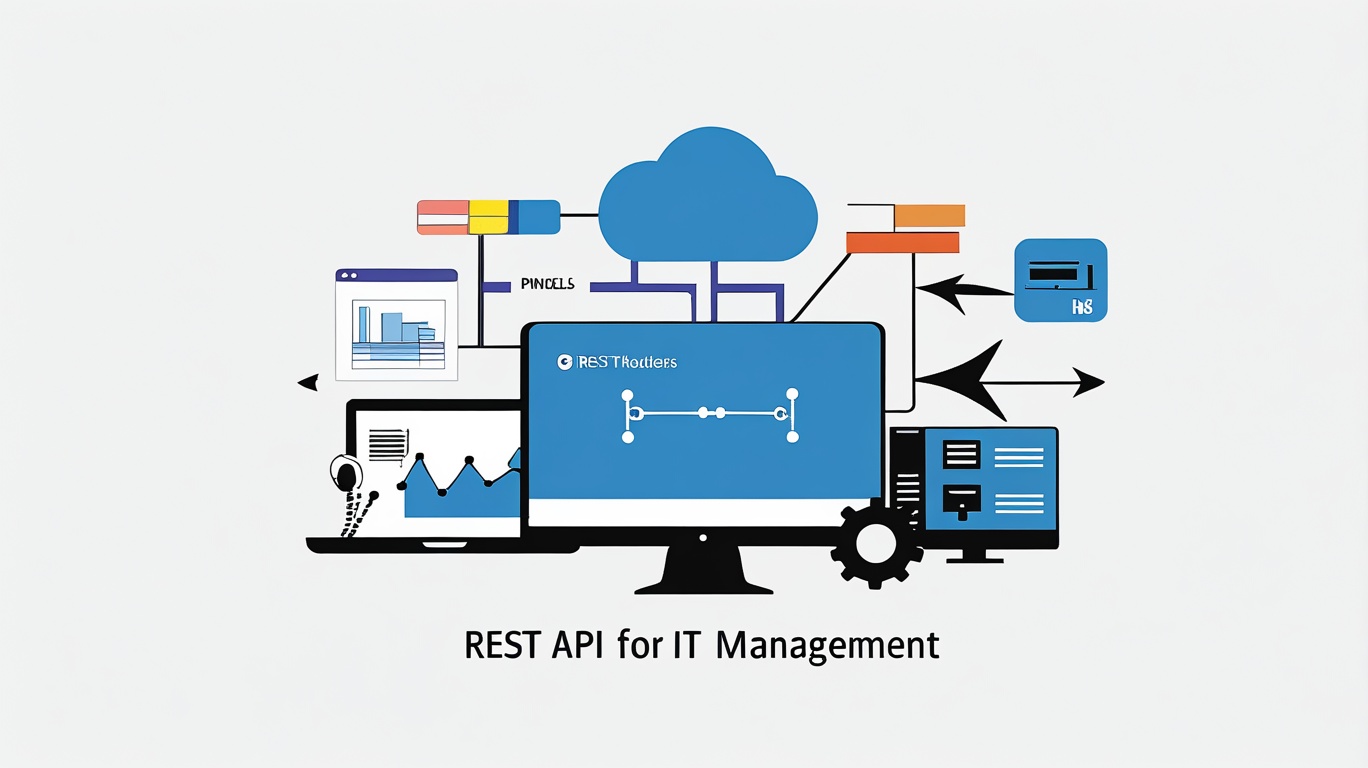
Modern IT environments rely on dozens of tools for monitoring, ticketing, asset management, security, cloud operations, and endpoint control. When these systems cannot communicate, teams lose time switching between platforms and updating information manually. A REST API for IT management helps solve this problem by allowing different applications to exchange data and trigger actions automatically. With the right API strategy, organizations can connect IT automation, ITSM integration, API integration, and endpoint management into more efficient workflows. For IT managers, cybersecurity teams, MSPs, and business leaders, a REST API for IT management provides the flexibility needed to build faster, more connected, and more scalable operations.
What is a REST API for IT Management
A REST API for IT management is an application programming interface that allows IT tools, platforms, and business systems to communicate using standard web-based methods.
REST commonly relies on HTTP methods such as:
- GET
- POST
- PUT
- PATCH
- DELETE
These requests allow applications to retrieve information, create records, update data, or remove resources.
For example, an endpoint management platform may expose an API that lets another system retrieve device data or trigger a maintenance action.
A service desk platform may use the same type of API to create tickets automatically when monitoring detects an issue.
This ability to connect systems makes REST APIs highly valuable for modern IT operations.
Why REST APIs Matter in IT Management
Technology teams often manage fragmented environments.
One platform may monitor endpoints, another handles tickets, another tracks assets, and another manages security events.
Without integration, technicians may need to copy information manually between systems.
This creates:
- Duplicate data entry
- Slower workflows
- Inconsistent records
- Delayed incident response
- Poor visibility
- More human error
A REST API for IT management removes many of these barriers by enabling direct system-to-system communication.
Instead of relying on technicians to move information manually, applications can exchange data automatically.
REST API for IT Management and Automation
One of the biggest benefits of APIs is their ability to support IT automation.
A REST API can allow workflows to perform actions automatically when predefined conditions occur.
For example:
- Monitoring detects low disk space.
- The monitoring system sends an API request.
- An automation platform runs a cleanup process.
- The endpoint is checked again.
- A ticket is created if the issue remains unresolved.
This workflow can happen without requiring a technician to perform every step manually.
Common Automation Use Cases
Organizations can use REST APIs to automate:
- Ticket creation
- User provisioning
- Patch deployment
- Asset updates
- Alert routing
- Software installation
- Device health checks
- Reporting
- Notification workflows
The result is faster execution and more consistent processes.
ITSM Integration Through REST APIs
ITSM integration is one of the most common uses of a REST API for IT management.
Service management platforms rely on accurate information from monitoring, asset, and infrastructure tools.
APIs can connect these systems directly.
For example, a monitoring platform can use an API to create an incident automatically inside the service desk.
The ticket may include:
- Device name
- Alert details
- User information
- System status
- Severity
- Diagnostic data
This gives technicians valuable context without requiring manual data entry.
Improve Ticket Workflows
REST APIs can also update ticket status as actions occur.
For example, when a device issue is resolved automatically, the service desk can receive an API update and close or update the related ticket.
This keeps service records current.
REST API for Endpoint Management
Modern organizations manage thousands of endpoints across offices, homes, and customer environments.
A REST API for IT management can connect endpoint management data with other operational platforms.
API-based integrations may provide access to:
- Device inventory
- Operating system details
- Patch status
- Installed applications
- Device health
- Security status
- User assignment
This information can be shared with service desks, asset systems, dashboards, or security tools.
Automate Endpoint Actions
Some platforms also allow actions to be triggered through APIs.
Depending on available permissions, workflows may be able to:
- Run scripts
- Deploy software
- Request scans
- Restart services
- Update policies
- Collect diagnostics
This helps teams scale endpoint management without performing every action manually.
API Integration for Asset Management
Accurate asset information is essential for effective IT operations.
API integration can help synchronize asset information across multiple platforms.
For example, when a new endpoint is detected, an API workflow can automatically create an asset record.
If the device owner changes, the asset platform can receive the updated information.
When the device is retired, the lifecycle status can also be updated automatically.
This helps reduce outdated records.
Improve Asset Accuracy
Automated synchronization can improve:
- Ownership records
- Device status
- Software inventory
- Location information
- Lifecycle stage
- Warranty tracking
Accurate data supports both operational decisions and compliance reporting.
REST APIs and Cybersecurity
Cybersecurity teams can also benefit from a REST API for IT management.
Security environments often contain multiple tools that generate alerts and events.
APIs allow these platforms to exchange data and trigger response workflows.
For example, a security platform can send an API request to:
- Create an incident
- Update an alert
- Isolate an endpoint
- Disable an account
- Trigger an investigation
- Collect system information
This enables faster response.
Support Security Automation
Security automation can reduce the time between detection and remediation.
REST APIs help connect detection tools with response systems.
This is especially useful in environments where fast response is critical.
Authentication and API Security
APIs can provide powerful access to systems, so security must be a priority.
A poorly secured API can expose sensitive data or allow unauthorized actions.
Organizations should implement strong authentication.
Common methods include:
- API keys
- OAuth
- Tokens
- Certificates
- Role-based access
Apply Least Privilege
Every API credential should receive only the permissions required for its task.
For example, a reporting integration may need read-only access.
It should not automatically receive permission to delete devices or change security settings.
This reduces risk.
Protect API Credentials
API keys and tokens should never be stored in unsecured documents or hard-coded into scripts without appropriate protection.
Use secure credential storage and rotate secrets regularly.
Rate Limits and Reliability
APIs often enforce rate limits to prevent excessive requests.
Organizations should design integrations carefully so they do not overload systems or exceed allowed request thresholds.
Good API workflows should include:
- Error handling
- Retry logic
- Logging
- Request throttling
- Failure alerts
This helps integrations remain reliable.
Monitor API Health
API integrations should be treated like other production services.
Teams should monitor:
- Request success rates
- Failed authentication
- Response times
- Error codes
- Synchronization delays
If an API fails silently, data may become outdated without anyone noticing.
REST API for MSP Operations
Managed Service Providers often manage multiple platforms across many customers.
A REST API for IT management helps MSPs connect monitoring, ticketing, billing, asset management, and security systems.
This can reduce technician workload.
Multi-Client Automation
APIs can automate recurring tasks across client environments.
Examples include:
- Creating tickets
- Updating asset records
- Pulling device health data
- Generating reports
- Synchronizing customer information
This helps MSPs scale more efficiently.
Improve Service Reporting
APIs can pull information from multiple tools into centralized reports.
Clients may receive data covering:
- Endpoint health
- Patch compliance
- Incident history
- Asset inventory
- Security status
This improves transparency.
REST API for Cloud Operations
Cloud environments generate large amounts of operational data.
A REST API can help IT teams connect cloud platforms with internal management systems.
Use cases include:
- Resource inventory
- Usage monitoring
- Cost tracking
- Configuration updates
- Alert management
- Automated provisioning
This creates a more unified view across cloud and on-premises infrastructure.
Benefits of REST API for IT Management
A well-designed API strategy can improve IT operations in several ways.
Faster Workflows
Systems exchange information automatically instead of waiting for manual updates.
Lower Manual Effort
Technicians spend less time copying data between platforms.
Better Data Accuracy
Automation reduces duplicate or inconsistent records.
Greater Scalability
APIs allow processes to handle larger environments without proportional increases in administrative work.
Improved Visibility
Connected systems provide a more complete view of infrastructure, assets, incidents, and security.
Better User Experience
Faster service delivery means employees and customers spend less time waiting for support.
Common REST API Challenges
Although APIs offer strong benefits, implementation requires planning.
Poor Documentation
Developers may struggle if API documentation is incomplete.
Authentication Errors
Incorrect or expired credentials can disrupt integrations.
Data Format Differences
Systems may represent the same information differently.
Version Changes
API updates can affect existing integrations.
Rate Limits
Excessive requests may be blocked.
Security Risks
Overly broad credentials create unnecessary exposure.
Organizations should address these issues before relying on APIs for critical workflows.
Best Practices for REST API for IT Management
A successful integration strategy should follow several principles.
1. Start with Clear Use Cases
Do not integrate systems simply because an API is available.
Identify a specific operational problem first.
2. Use Least-Privilege Credentials
Grant only the permissions required.
3. Document Every Integration
Record:
- API endpoints
- Authentication method
- Data flows
- Dependencies
- Owners
- Error procedures
4. Test Before Production
Use test environments when possible.
Verify both successful and failed requests.
5. Monitor Performance
Track API errors and synchronization failures.
6. Plan for Changes
APIs evolve.
Maintain version awareness and test updates before deployment.
7. Protect Sensitive Data
Avoid exposing unnecessary information through integrations.
Key Metrics to Measure API Integration Success
Organizations can measure whether API integrations improve operations.
Useful metrics include:
- Number of automated workflows
- Manual hours saved
- API success rate
- Average response time
- Failed request rate
- Ticket automation rate
- Data synchronization accuracy
- Mean time to resolution
These measurements help teams identify where integrations deliver the most value.
Future Trends in API-Based IT Management
APIs will become even more important as IT environments continue to grow.
AI-Driven Automation
AI systems can use APIs to collect context and trigger actions.
For example, an AI assistant may analyze an incident and use APIs to retrieve device information or recommend remediation.
Event-Driven Integration
Instead of constantly checking systems for changes, event-driven architectures can trigger workflows immediately when an event occurs.
Low-Code Integration
Low-code tools increasingly allow administrators to create API workflows without writing large amounts of code.
Unified Operations
Organizations will continue connecting service desks, endpoint platforms, asset systems, security tools, and cloud environments.
REST APIs will remain a key layer in this connected architecture.
Frequently Asked Questions
Q1: What is a REST API for IT management?
A REST API for IT management allows IT platforms and business systems to exchange data, trigger actions, and automate workflows using standard web-based requests.
Q2: How can REST APIs improve IT automation?
REST APIs allow systems to trigger actions automatically, such as creating tickets, deploying software, updating assets, or collecting device information.
Q3: Are REST APIs secure?
They can be secure when organizations use strong authentication, encrypted connections, least-privilege permissions, secure credential storage, and proper monitoring.
Q4: Can REST APIs integrate ITSM and endpoint management?
Yes. APIs can connect service desk platforms with endpoint systems so tickets contain device information and automation can update service records.
Q5: What should businesses consider before using APIs?
Organizations should review authentication, permissions, documentation, rate limits, error handling, versioning, and monitoring before deploying production integrations.
Final Thoughts
Disconnected tools slow IT teams down. A REST API for IT management provides a practical way to connect platforms, automate repetitive work, and share information across service management, endpoint operations, asset tracking, and cybersecurity.
By combining IT automation, ITSM integration, API integration, and endpoint management, organizations can build workflows that are faster, more accurate, and easier to scale. The best results come from starting with clear business problems, using secure authentication, monitoring integration health, and continuously measuring value.
APIs should not add complexity for its own sake. When designed carefully, they create a flexible foundation that allows IT teams to connect systems, reduce manual work, and respond more quickly to business needs.
Elevate your IT management — start your complimentary ITarian trial

 Loading...