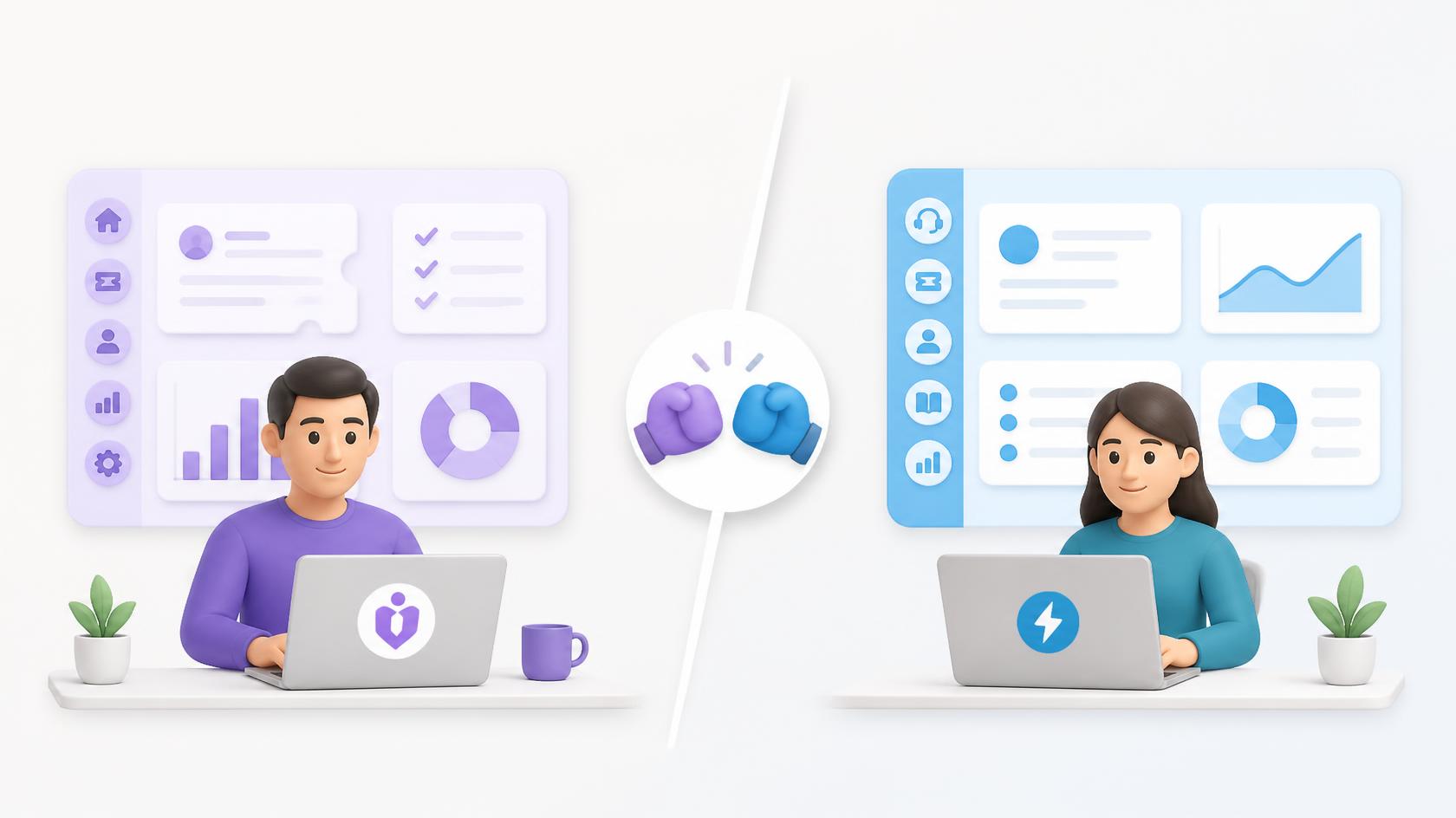
Choosing between ITarian vs Freshservice can be confusing because both platforms support IT teams, but they approach the job from different angles. ITarian emphasizes remote monitoring, endpoint management, patching, ticketing, remote control, and broader IT operations from a unified platform. Freshservice is positioned primarily around IT service management, asset management, service workflows, automation, and IT operations management.
For IT managers, MSPs, cybersecurity professionals, and business leaders, the key is not deciding which brand is universally “better.” The useful question is which platform’s current capabilities match your operational model, budget, service maturity, and infrastructure needs.
What is ITarian
ITarian is an IT management platform designed around endpoint administration, Remote Monitoring and Management (RMM), patching, remote access, automation, and service desk workflows.
Its current RMM offering highlights real-time monitoring, automated patching, remote access, endpoint security, multi-OS support, reporting, and scalable cloud-based management.
The broader ITarian platform also includes:
- Remote Monitoring and Management
- Remote control
- Patch management
- Endpoint management
- Automated ticketing
- Asset and inventory visibility
- Software deployment
- Policies and compliance
- Reporting
- Automation and scripting
ITarian’s Service Desk supports ticket management, SLA configuration, workflow automation, reporting, ticket assignment, projects, customer management, and other support processes.
What is Freshservice
Freshservice is Freshworks’ cloud-based ITSM platform for service management, asset management, employee support, IT operations, and automation.
Its current plans include features such as incident management, knowledge management, service catalogs, SLA management, problem management, change management, major incident management, workflow automation, IT asset management, and cloud management.
Freshservice also offers deeper ITAM capabilities across higher tiers, including:
- Hardware asset management
- Asset lifecycle management
- CMDB
- Software asset management
- SaaS discovery
- Service discovery
- Application dependency mapping
- Business service mapping
Freshworks expanded Freshservice ITAM in 2026 with deeper discovery and dependency-mapping capabilities.
ITarian vs Freshservice: Core Difference
The most important distinction in ITarian vs Freshservice is the center of gravity of each platform.
ITarian is strongly oriented toward endpoint operations, RMM, remote control, patching, monitoring, and integrated service desk functionality. Freshservice is primarily centered on ITSM workflows, service delivery, asset management, CMDB, automation, and enterprise service operations.
| Area | ITarian | Freshservice |
|---|---|---|
| RMM | Core capability | Not positioned primarily as an RMM platform |
| Remote control | Built in | Service-management focused rather than remote-control centered |
| Patch management | Core endpoint capability | Available through broader IT operations and asset workflows |
| Service desk | Included | Core ITSM capability |
| Incident management | Supported through Service Desk | Core capability |
| Problem/change management | More service-desk oriented | Strong dedicated ITSM capability |
| Asset management | Endpoint and inventory oriented | Dedicated ITAM and CMDB tiers |
| Automation | Endpoint and workflow automation | Workflow Automator and orchestration |
| MSP focus | RMM + service desk + endpoint operations | Dedicated MSP offering available |
The comparison therefore depends heavily on whether the organization’s main problem is operational endpoint control or structured service management.
ITarian vs Freshservice for RMM
This is one of the clearest differences.
ITarian’s RMM product is designed to monitor, manage, patch, and secure endpoints from a centralized console. Its official product page highlights automated patch management, proactive alerts, multi-OS support, centralized patching, rollback, compliance reporting, automation, and endpoint security workflows.
ITarian also supports profiles and monitoring rules that can generate notifications or Service Desk tickets when defined conditions occur.
Freshservice, by comparison, is not positioned primarily as a traditional RMM product. Its strength lies more in ITSM, ITAM, ITOM, alert management, service health, cloud management, and operational workflow orchestration.
Organizations that need technicians to remotely monitor endpoint conditions, patch devices, and access machines directly should examine that distinction carefully.
ITarian vs Freshservice for Service Desk Operations
Both platforms support service workflows, but Freshservice offers a broader dedicated ITSM structure.
ITarian Service Desk supports ticket intake, ticket assignment, workflows, SLA configuration, reporting, user and customer management, projects, and support processes. Tickets can also be generated automatically by endpoint monitoring, and technicians can launch remote control from certain endpoint-generated tickets.
Freshservice organizes its ITSM offering into multiple plan levels. The current Starter plan includes incident management, knowledge management, task management, and a support portal. Growth adds service catalog and SLA capabilities, while Pro adds problem management, change management, major incident management, release management, and workload management.
For teams seeking deeper formal ITSM processes, those differences may materially affect implementation.
Remote Support and Endpoint Control
Remote support is another important factor in the ITarian vs Freshservice comparison.
ITarian allows technicians to remotely control supported endpoints, including Windows and macOS devices, and Service Desk tickets generated from Endpoint Manager can provide a remote-control path directly from the ticket.
Its remote-access suite also lists capabilities such as remote control, device management, patching, automation, inventory, reporting, and network-related functionality.
Freshservice focuses more heavily on service workflows and IT operations rather than being centered around direct endpoint control.
That distinction matters for MSPs and internal support teams that spend significant time troubleshooting employee devices remotely.
ITarian vs Freshservice for Asset Management
Freshservice currently offers a more explicit tiered ITAM model.
Freshservice IT Asset Management includes hardware asset management, lifecycle management, CMDB, Windows/macOS/Linux discovery, network and cloud discovery, and workflow automation. Higher tiers add software asset management, SaaS discovery, service discovery, dependency mapping, and business service mapping.
ITarian provides device inventory, endpoint visibility, reporting, discovery, and endpoint management within its wider platform. Its admin console also provides visibility into ticket activity, patches, applications, operating systems, and endpoint connection status.
So the practical distinction is depth and emphasis: Freshservice has a dedicated ITAM/CMDB product structure, while ITarian connects asset and endpoint visibility more directly with RMM and operational endpoint management.
Automation Capabilities
Automation is important in both platforms.
ITarian emphasizes automation across endpoint maintenance, monitoring, scripting, patching, alerting, and service workflows. Its RMM materials describe customizable scripts, AI-driven workflows, automated patch deployment, and proactive maintenance.
Freshservice provides Workflow Automator across its plans, including multi-approval workflows and workflow execution logs. It also supports orchestration actions with third-party applications and provides different orchestration transaction allowances depending on the plan.
This means the automation decision should focus on the type of automation you need.
ITarian is more directly tied to endpoint and RMM automation. Freshservice places more emphasis on service processes, approval workflows, orchestration, and enterprise service automation.
ITarian vs Freshservice for MSPs
Both products support managed service scenarios, but their models differ.
ITarian has long positioned RMM, remote control, patching, endpoint management, service desk, ticketing, customer support, and business automation as parts of a wider platform for MSPs and IT departments.
Freshservice now also offers a dedicated MSP plan. Its current MSP Core plan is listed at $49 per agent per month when billed annually and includes client management, a knowledge base, workflow automation, reports, portal customization, incident management, self-service, access controls, and multiple SLA management.
MSPs should therefore compare whether their service model is more endpoint-operation intensive or service-management intensive.
Pricing Considerations
Pricing is another important area in ITarian vs Freshservice.
Freshservice currently publishes annual per-agent pricing for its main ITSM tiers:
- Starter: $19 per agent/month
- Growth: $49 per agent/month
- Pro: $99 per agent/month
- Enterprise: custom pricing
Freshservice also lists Freddy AI Copilot as a $29 per-agent/month add-on in applicable plans, while ITAM capacity and additional orchestration usage can involve separate pricing considerations.
Freshservice’s dedicated MSP Core plan is currently listed at $49 per agent/month when billed annually.
ITarian’s current public messaging emphasizes free cloud ticketing, remote access, and its broader cloud platform, while individual product economics can depend on the services and endpoint volumes selected.
Because packaging can change, organizations should verify current quotes before making a purchasing decision.
ITarian vs Freshservice for Cybersecurity Operations
Neither product should be treated as a complete replacement for a dedicated cybersecurity stack. However, both can contribute to security operations differently.
ITarian’s operational value comes from endpoint monitoring, patch visibility, device policies, remote management, and alerts. Its RMM documentation highlights patch compliance, endpoint security, and real-time monitoring.
Freshservice can support security-related operations through incident management, change management, asset visibility, CMDB relationships, alert management, service health monitoring, and workflow orchestration.
For cybersecurity teams, the decision should consider how each tool fits with existing endpoint security, SIEM, identity, vulnerability management, and incident-response systems.
Where ITarian is Particularly Strong
ITarian’s strongest differentiation appears in the connection between endpoint management and support operations.
Its platform brings together:
- RMM
- Remote access
- Patch management
- Endpoint monitoring
- Device policies
- Service desk
- Automated ticket generation
- Automation and scripting
- Inventory and reporting
A monitor can trigger a Service Desk ticket, and technicians can use remote-control functionality from supported endpoint-generated tickets. That workflow creates a direct connection between detection and remediation.
This can be useful for teams whose daily workload centers on device maintenance and remote technical support.
Where Freshservice is Particularly Strong
Freshservice’s current offering is especially deep in structured service management.
Its strengths include:
- Formal incident workflows
- Problem management
- Change management
- Major incident management
- Service catalogs
- SLA management
- Workflow automation
- CMDB
- Advanced ITAM
- Service mapping
- Enterprise service management
Its 2026 ITAM enhancements also expanded infrastructure discovery and application dependency mapping.
Organizations with mature ITIL-style processes may find these capabilities particularly relevant.
Frequently Asked Questions
Q1: What is the main difference between ITarian and Freshservice?
ITarian places significant emphasis on RMM, endpoint management, patching, remote access, automation, and integrated service desk workflows. Freshservice is primarily focused on ITSM, ITAM, IT operations, service workflows, CMDB, and enterprise automation.
Q2: Does ITarian include a service desk?
Yes. ITarian Service Desk supports ticket management, workflows, SLA configuration, reporting, customer management, projects, and other support functions.
Q3: Does Freshservice include asset management?
Yes. Freshservice currently offers dedicated IT Asset Management packages with hardware lifecycle management, discovery, CMDB, workflow automation, and higher-tier software and service mapping capabilities.
Q4: Which platform supports MSPs?
Both have MSP-relevant capabilities. ITarian combines RMM, endpoint operations, remote support, and Service Desk functionality, while Freshservice has a dedicated MSP offering with client management, workflow automation, incident management, self-service, reporting, and SLA capabilities.
Q5: How should businesses evaluate ITarian vs Freshservice?
Compare the platforms against your actual requirements for endpoint management, RMM, ITSM maturity, remote support, asset management, automation, integrations, agent counts, endpoint volumes, and total cost. Product packaging and pricing should be verified directly before purchase.
Final Thoughts
The ITarian vs Freshservice comparison is ultimately about operational priorities rather than finding one universal winner. ITarian brings RMM, endpoint monitoring, patching, remote access, automation, and service desk capabilities into a connected IT-management environment. Freshservice provides a broad ITSM-centered platform with incident, problem, change, asset, CMDB, ITOM, workflow, and enterprise service management capabilities.
Organizations with endpoint-heavy support environments should pay close attention to remote management, patching, and operational automation. Teams with mature ITSM requirements should closely examine service workflows, CMDB depth, change processes, asset management, and enterprise orchestration.
The strongest evaluation begins with your workflows, not the vendor names. Map what your technicians do each day, identify where manual work creates delays, calculate the full operating cost, and then determine which platform better supports those requirements.
Elevate your IT management — start your complimentary ITarian trial

 Loading...