
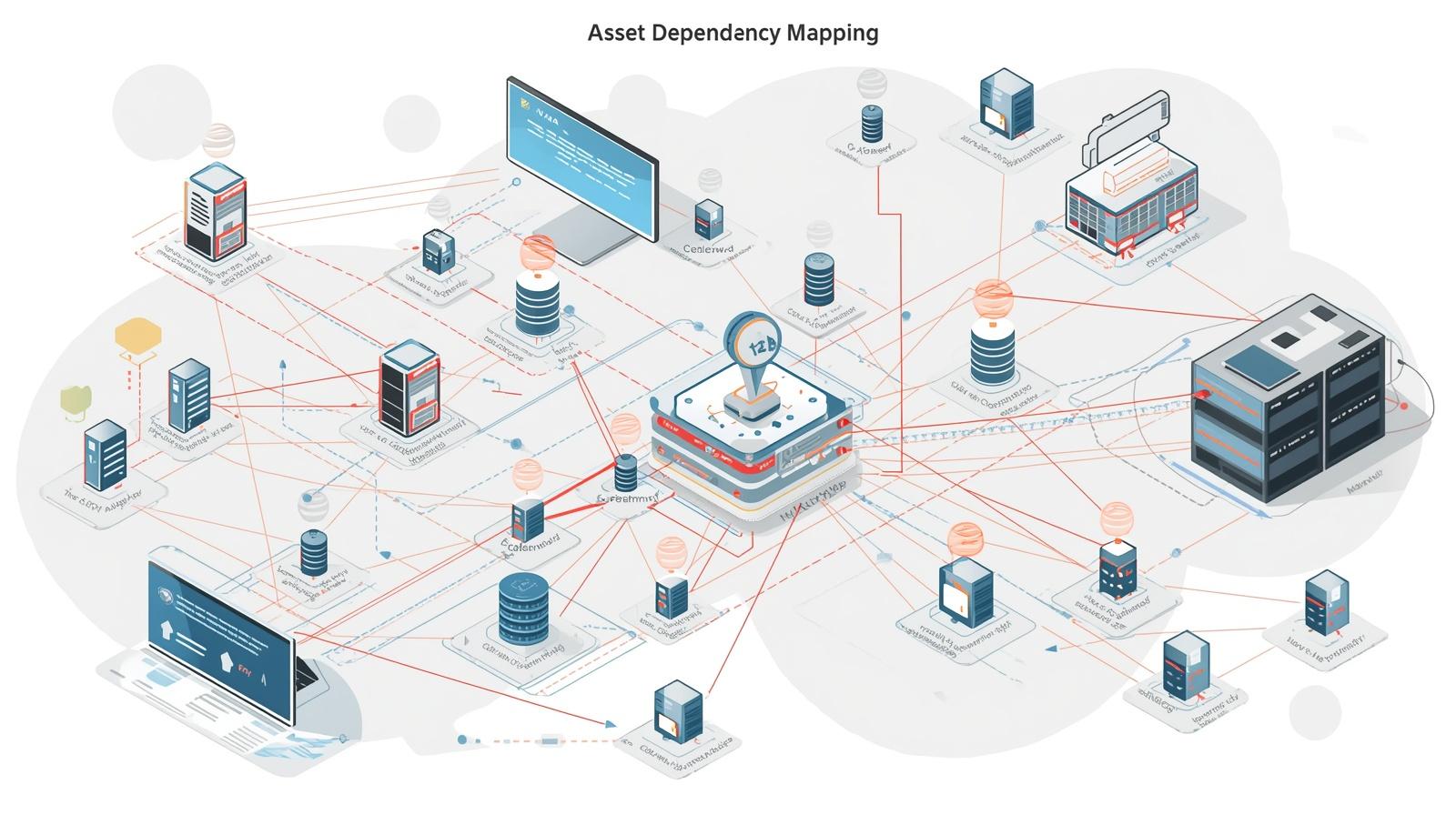
Modern IT environments are more interconnected than ever. Applications rely on servers, servers connect to networks, and cloud services integrate with countless business systems. When one component fails, the impact can spread quickly across the organization. This is why asset dependency mapping has become essential for modern IT operations. By identifying relationships between systems, applications, and devices, organizations gain deeper visibility into their infrastructure and improve decision-making. For IT managers, cybersecurity professionals, and business leaders, asset dependency mapping helps reduce downtime, strengthen security, and improve operational efficiency in increasingly complex environments.
What is Asset Dependency Mapping
Asset dependency mapping is the process of identifying and documenting relationships between IT assets, applications, services, and infrastructure components. It provides a visual representation of how systems interact and depend on one another.
Organizations use configuration management databases (CMDBs), IT asset management tools, network discovery solutions, and infrastructure monitoring platforms to support asset dependency mapping.
Key elements include:
- Application-to-server relationships
- Network dependencies
- Cloud resource connections
- Service mapping
- Data flow tracking
- Infrastructure visibility
Asset dependency mapping helps organizations understand how changes or failures in one area affect the rest of the environment.
Why Asset Dependency Mapping Matters in Modern IT
Today’s IT infrastructures are dynamic and highly distributed. Without proper visibility, organizations struggle to manage risks and maintain stability.
Complex IT Environments
Hybrid cloud systems and remote operations increase infrastructure complexity.
Faster Incident Resolution
Dependency visibility helps teams identify root causes quickly.
Improved Change Management
Understanding dependencies reduces the risk of disruptions during updates.
Enhanced Cybersecurity
Dependency mapping reveals hidden vulnerabilities and attack paths.
Better Compliance
Organizations can document relationships for audits and regulatory requirements.
For CEOs and founders, asset dependency mapping improves operational resilience and supports strategic decision-making.
Core Components of Asset Dependency Mapping
Effective asset dependency mapping relies on several key components.
Asset Discovery
Identify devices, applications, servers, and cloud resources.
Relationship Identification
Determine how assets connect and interact.
Visualization Tools
Create visual maps that simplify analysis.
Real-Time Monitoring
Track changes in infrastructure continuously.
Data Integration
Combine information from multiple systems and tools.
Reporting and Analytics
Generate actionable insights for IT teams.
These components help organizations maintain accurate visibility into their environments.
Benefits of Asset Dependency Mapping Across Industries
Asset dependency mapping provides measurable value across different sectors.
Healthcare
- Improves system reliability for patient care
- Reduces downtime risks
- Supports compliance requirements
Finance
- Enhances risk management
- Improves service continuity
- Supports regulatory audits
Retail
- Prevents disruptions in customer-facing systems
- Improves operational visibility
- Enhances network performance
Manufacturing
- Monitors operational technology dependencies
- Reduces production interruptions
- Improves maintenance planning
Education
- Supports digital learning environments
- Enhances system stability
- Improves IT resource management
For IT leaders, these benefits improve visibility, resilience, and operational control.
Common Challenges in Asset Dependency Mapping
Although asset dependency mapping provides major advantages, organizations often face implementation challenges.
Incomplete Asset Visibility
Shadow IT and unmanaged devices create gaps.
Dynamic Environments
Cloud systems change frequently, making mapping difficult.
Integration Complexity
Different tools and platforms may not connect easily.
Large Data Volumes
Complex environments generate extensive relationship data.
Manual Processes
Traditional mapping methods are time-consuming and error-prone.
Overcoming these challenges requires automation and centralized visibility tools.
Best Practices for Effective Asset Dependency Mapping
Organizations should follow proven strategies to maximize the effectiveness of asset dependency mapping.
Automate Asset Discovery
Use tools that continuously scan and identify assets.
Centralize Data Collection
Combine data from multiple systems into a unified platform.
Monitor Continuously
Track changes in real time to maintain accurate maps.
Prioritize Critical Assets
Focus on systems that support core business operations.
Integrate Security Monitoring
Connect mapping tools with cybersecurity platforms.
Update Maps Regularly
Ensure dependency data remains current and accurate.
These best practices improve accuracy and operational efficiency.
Role of Automation in Asset Dependency Mapping
Automation is essential for modern asset dependency mapping because IT environments change constantly.
Key benefits include:
- Continuous asset discovery
- Real-time dependency updates
- Faster incident analysis
- Reduced manual errors
- Improved scalability
Automation enables IT teams to maintain accurate visibility without excessive manual effort.
How Asset Dependency Mapping Improves Cybersecurity
Cybersecurity teams use asset dependency mapping to strengthen defenses and reduce risks.
Identifying Attack Paths
Dependency maps reveal how attackers could move through systems.
Faster Threat Containment
Teams can isolate affected systems more quickly.
Improved Vulnerability Management
Critical dependencies receive higher security priority.
Better Incident Response
Security teams understand the broader impact of incidents.
Compliance Support
Dependency documentation helps satisfy regulatory requirements.
For cybersecurity professionals, dependency mapping provides critical context for protecting infrastructure.
How to Choose the Right Asset Dependency Mapping Tools
Selecting the right solution is critical for successful implementation. Consider these factors when evaluating platforms.
Scalability
Choose a solution that supports growing infrastructures.
Integration Capabilities
Ensure compatibility with existing IT systems.
Real-Time Monitoring
Select platforms that update dependencies automatically.
Visualization Features
Choose tools with intuitive and detailed mapping interfaces.
Security Integration
Look for platforms that connect with SIEM and monitoring tools.
Reporting and Analytics
Ensure the solution provides actionable insights.
A strong platform improves operational visibility and long-term efficiency.
How to Implement Asset Dependency Mapping Successfully
A structured implementation strategy helps organizations avoid common issues.
Step 1: Assess Current Infrastructure
Identify existing assets and management tools.
Step 2: Define Objectives
Set goals for visibility, security, and operational efficiency.
Step 3: Select the Right Platform
Choose tools that align with organizational requirements.
Step 4: Automate Asset Discovery
Enable continuous infrastructure scanning.
Step 5: Create Dependency Maps
Visualize relationships between systems and applications.
Step 6: Integrate Monitoring and Security Tools
Connect mapping solutions with operational platforms.
Step 7: Monitor and Optimize
Continuously refine dependency maps and workflows.
Following these steps ensures successful implementation and long-term value.
Future Trends in Asset Dependency Mapping
The future of asset dependency mapping is driven by innovation and automation.
AI-Powered Dependency Analysis
Artificial intelligence improves relationship detection and analytics.
Cloud-Native Mapping Solutions
Cloud platforms provide better scalability and flexibility.
Predictive Impact Analysis
Advanced analytics forecast potential disruptions before they occur.
Zero Trust Integration
Dependency maps support continuous verification strategies.
Real-Time Infrastructure Intelligence
Organizations gain instant insights into operational dependencies.
Businesses that embrace these trends will improve resilience and agility.
Actionable Tips to Improve Asset Dependency Mapping
If you want to strengthen your dependency mapping strategy, consider these practical tips:
- Automate asset discovery processes
- Use centralized visibility platforms
- Integrate mapping with cybersecurity tools
- Monitor dependencies continuously
- Prioritize critical business systems
- Regularly review and update dependency maps
These strategies help organizations improve operational visibility and reduce risks.
Frequently Asked Questions
Q1: What is asset dependency mapping?
Asset dependency mapping identifies and visualizes relationships between IT assets, systems, and applications.
Q2: Why is asset dependency mapping important?
It improves visibility, reduces downtime risks, and supports cybersecurity efforts.
Q3: What tools are used for asset dependency mapping?
Organizations use CMDBs, monitoring tools, and network discovery platforms.
Q4: Can small businesses benefit from asset dependency mapping?
Yes, dependency mapping improves visibility and operational control for businesses of all sizes.
Q5: How does automation improve dependency mapping?
Automation enables continuous asset discovery and real-time updates with minimal manual effort.
Final Thoughts
Asset dependency mapping is essential for organizations that want better visibility into their IT infrastructure and stronger operational resilience. By identifying relationships between systems, applications, and services, businesses can improve change management, strengthen cybersecurity, and reduce downtime risks. For IT managers, cybersecurity professionals, and business leaders, investing in asset dependency mapping is a strategic move that supports efficiency, scalability, and long-term success. As IT environments continue to grow more complex, organizations that prioritize dependency visibility will be better prepared to manage risks and maintain stable operations.

 Loading...