
What happens when IT teams focus on keeping systems running while security teams focus on protecting them, but neither has a complete view of the environment? Small gaps can quickly turn into serious business risks. IT & Security convergence helps organizations overcome this challenge by bringing IT operations and cybersecurity processes together. Instead of working in separate systems, teams share information, coordinate responses, and apply consistent security controls.
By combining IT security management, unified endpoint management, cybersecurity automation, and Zero Trust security, businesses can strengthen protection while improving operational efficiency. For IT managers, cybersecurity professionals, MSPs, CEOs, and business owners, IT & Security convergence creates a practical foundation for secure, reliable, and scalable technology operations.
What is IT & Security Convergence
IT & Security convergence is the process of aligning IT operations and cybersecurity functions through shared tools, policies, workflows, and responsibilities. Traditionally, IT teams manage infrastructure, devices, applications, networks, and technical support. Security teams focus on preventing threats, protecting sensitive information, managing vulnerabilities, and responding to incidents.
Although these responsibilities differ, they often involve the same systems. For example, an outdated operating system is both an IT maintenance concern and a cybersecurity risk. A converged approach helps both teams address such issues through coordinated processes. Rather than creating one department responsible for everything, convergence encourages better collaboration and shared visibility.
Why IT & Security Convergence Matters
Modern businesses operate across cloud platforms, remote workplaces, SaaS applications, and traditional infrastructure. This makes technology environments more complex. When IT and security teams work independently, organizations may experience:
- Limited endpoint visibility
- Delayed vulnerability remediation
- Inconsistent security policies
- Duplicate monitoring tools
- Slow incident response
- Poor communication
- Unclear responsibilities
- Higher operational costs
IT & Security convergence helps reduce these problems by connecting operational activities with security priorities. For instance, a security team may identify a vulnerable application, while the IT team manages its deployment and patching. A shared workflow allows both teams to coordinate remediation, test the update, and confirm successful deployment.
Key Benefits of IT & Security Convergence
Stronger Cybersecurity Protection
Security becomes more effective when teams have accurate information about devices, applications, users, and system configurations. IT & Security convergence allows cybersecurity teams to use operational data when assessing risks. At the same time, IT teams can consider security requirements during maintenance and support activities.
Faster Incident Response
A security incident often requires technical actions such as isolating devices, removing malicious software, updating configurations, or restoring services.
Coordinated workflows help reduce delays between detection and remediation.
Better Operational Efficiency
Separate tools and repeated manual tasks increase administrative work.
A unified approach can reduce duplicate activities and improve resource utilization.
Improved Business Continuity
Reliable infrastructure and effective security controls support business continuity.
When teams collaborate, they can respond more effectively to technical failures and security incidents.
IT Security Management in a Converged Environment
IT security management involves protecting technology resources through policies, controls, monitoring, and risk assessment. In a converged environment, these responsibilities become part of everyday IT operations. Security considerations should influence:
- Software deployment
- Patch management
- Access control
- Device configuration
- Infrastructure changes
- Remote support
- Asset management
- Incident handling
For example, IT teams should verify that new devices meet security requirements before allowing them to access business resources. This reduces the risk of introducing unmanaged or vulnerable systems.
Establish Shared Security Policies
Organizations should define policies that both IT and security teams understand. These policies may cover password requirements, device encryption, patch schedules, administrative access, and approved software. Consistent enforcement helps reduce gaps between departments.
Unified Endpoint Management and Security
Endpoints remain a major focus of IT & Security convergence because employees use laptops, desktops, mobile devices, and other systems to access business information.
Unified endpoint management helps organizations maintain visibility and control across supported devices.
Important capabilities include:
- Device inventory
- Software deployment
- Patch management
- Configuration policies
- Remote troubleshooting
- Compliance monitoring
- Device lifecycle tracking
When endpoint management and security processes work together, teams can identify outdated software, enforce approved configurations, and investigate suspicious conditions more efficiently.
Reduce Endpoint Security Gaps
An unmanaged device can create unnecessary exposure.
Organizations should maintain accurate endpoint inventories and regularly review device compliance.
Devices that fail important security checks should be investigated before they create larger risks.
Cybersecurity Automation for Faster Response
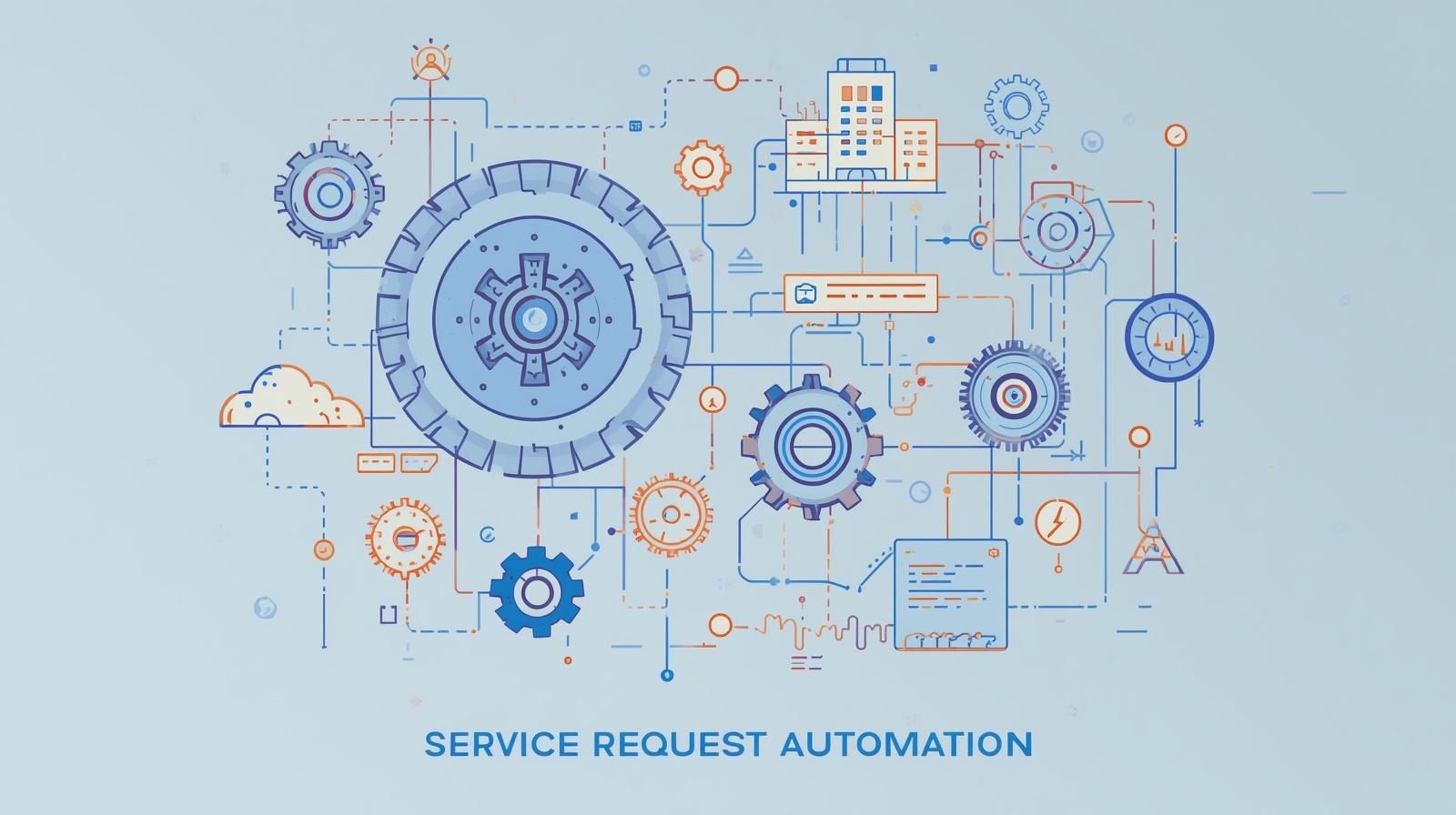
Manual security and maintenance tasks can slow down operations. Cybersecurity automation helps organizations complete repeatable activities with greater consistency.
Common automation opportunities include:
- Vulnerability notifications
- Patch deployment
- Security policy enforcement
- Device health checks
- Incident ticket creation
- Configuration verification
- Compliance reporting
- Approved remediation scripts
For example, a monitoring system may identify a missing critical patch. An automated workflow can create a ticket, assign responsibility, schedule deployment, and verify installation. This reduces unnecessary manual coordination. However, high-risk remediation should still require appropriate review and approval.
Zero Trust Security and IT Operations
Zero Trust security is based on the principle that access should not be trusted simply because a user or device is inside a corporate network. Access decisions should consider identity, device condition, permissions, and other relevant signals. IT & Security convergence supports Zero Trust by connecting identity management with endpoint visibility and operational controls.
Organizations can strengthen their approach through:
- Multi-factor authentication
- Least-privilege access
- Device compliance checks
- Identity verification
- Network segmentation
- Continuous monitoring
- Regular access reviews
Verify Device Health Before Access
A user may have valid credentials while using an outdated or compromised device.
Combining endpoint management with access policies helps organizations consider device security before granting access to sensitive resources.
This creates stronger protection for distributed workplaces.
IT & Security Convergence in Cloud Environments
Cloud adoption introduces new responsibilities for IT and cybersecurity teams. Organizations must manage cloud resources while protecting identities, applications, workloads, and stored information.
Common challenges include:
- Misconfigured cloud services
- Excessive user permissions
- Unapproved resources
- Inconsistent security policies
- Limited workload visibility
- Uncontrolled configuration changes
IT & Security convergence helps organizations coordinate cloud administration and security oversight. For example, infrastructure teams can work with security professionals to define approved deployment templates and access policies. Continuous monitoring then helps identify deviations from those standards.
Vulnerability Management and Patch Coordination
Vulnerability management is a clear example of why IT and security teams must collaborate. Security teams identify vulnerabilities and assess potential risks.
IT teams usually manage patch testing, deployment, and system availability. Without coordination, remediation can become delayed.
A shared process should include:
- Identify affected assets.
- Assess vulnerability severity and exposure.
- Prioritize business-critical systems.
- Test appropriate updates.
- Schedule remediation.
- Verify successful deployment.
- Document unresolved exceptions.
This approach connects security priorities with operational realities.
IT & Security Convergence for MSPs
Managed Service Providers often support multiple customers with different infrastructure and security requirements. This makes coordinated operations particularly important. IT & Security convergence helps MSPs combine service delivery with stronger security oversight.
Potential benefits include:
- Centralized endpoint visibility
- Consistent patch management
- Faster incident escalation
- Automated maintenance
- Better customer reporting
- Improved policy enforcement
- Reduced operational duplication
MSPs can also create standardized service workflows while allowing customer-specific security requirements. This supports more consistent service quality across managed environments.
The Role of Monitoring and Reporting
Effective convergence depends on reliable information. IT teams need visibility into system performance and availability. Security teams need insight into vulnerabilities, access activity, and suspicious behavior. Shared reporting helps both teams understand operational risk.
Useful reports may include:
- Endpoint compliance
- Patch status
- Vulnerability remediation
- Security incidents
- Device availability
- Configuration changes
- Access violations
- Incident response times
These reports also help business leaders evaluate technology risk and operational performance.
Common Challenges in IT & Security Convergence
Despite its benefits, convergence requires organizational changes.
Different Team Priorities
IT teams often prioritize availability and productivity.
Security teams focus on reducing exposure and protecting information.
Both priorities matter, but teams need shared goals.
Disconnected Tools
Organizations may use separate monitoring, endpoint management, ticketing, and security platforms.
Integrations can improve visibility without requiring every tool to be replaced.
Unclear Responsibilities
Without defined ownership, important tasks may be delayed.
Teams should document responsibilities for detection, approval, remediation, and reporting.
Resistance to Change
Employees may be comfortable with existing workflows.
Training and gradual implementation can help teams adopt new processes.
Key Metrics to Measure Convergence Success
Organizations should measure whether IT & Security convergence delivers meaningful improvements.
Useful indicators include:
- Mean time to detect incidents
- Mean time to respond
- Patch compliance rate
- Vulnerability remediation time
- Percentage of managed endpoints
- Security policy compliance
- Repeated incident frequency
- Automated remediation success rate
- Unresolved critical risks
- Service availability
Tracking these metrics helps teams identify weaknesses and demonstrate progress.
Actionable Steps to Improve IT & Security Convergence
Businesses can begin with a focused implementation plan:
- Review existing IT and security responsibilities.
- Identify overlapping tools and processes.
- Create a shared inventory of critical assets.
- Establish common security and operational goals.
- Connect endpoint monitoring with security workflows.
- Define vulnerability remediation responsibilities.
- Introduce automation for low-risk tasks.
- Improve communication during incidents.
- Measure security and operational performance.
- Review policies and workflows regularly.
Start with one high-value process, such as patch management or incident response.
Once teams demonstrate measurable improvements, expand the approach to other operational areas.
Frequently Asked Questions
Q1: What is IT & Security convergence?
IT & Security convergence is the alignment of IT operations and cybersecurity through shared visibility, coordinated workflows, integrated technologies, and common operational goals.
Q2: Why is IT & Security convergence important?
It helps organizations reduce security gaps, improve collaboration, accelerate incident response, simplify operations, and maintain consistent controls across technology environments.
Q3: How does IT & Security convergence improve cybersecurity?
It connects security insights with operational capabilities such as endpoint management, patch deployment, configuration control, and incident remediation.
Q4: Can small businesses benefit from IT & Security convergence?
Yes. Small businesses can improve security and operational efficiency by combining monitoring, endpoint management, access controls, and support workflows, even with limited IT resources.
Q5: What technologies support IT & Security convergence?
Common technologies include RMM platforms, unified endpoint management, ITSM software, identity management, security monitoring, vulnerability management, and automation tools.
Final Thoughts
Modern organizations cannot treat IT operations and cybersecurity as completely separate responsibilities. Every endpoint, application, cloud workload, and network connection affects both business performance and security. IT & Security convergence creates a more connected approach by bringing operational visibility, security controls, automation, and incident response into coordinated workflows. It helps teams address technical problems while considering their potential security impact. By combining IT security management, unified endpoint management, cybersecurity automation, and Zero Trust security, businesses can reduce operational gaps and build stronger protection across their environments.

 Loading...