The Future of IT Support: Why Outsourcing IT Help Desk Services Makes Sense
Updated on December 11, 2025, by ITarian

If your organization is growing faster than your internal support team can handle, you’ve probably wondered whether outsourcing IT help desk operations is the smarter move. Understanding outsourcing IT help desk models helps modern businesses reduce operational strain, strengthen cybersecurity, and streamline internal workflows—especially as remote teams expand across multiple locations. Many IT leaders adopt outsourced IT support because it offers 24/7 coverage, predictable costs, and instant access to specialized expertise.
What Outsourcing IT Help Desk Really Means
When businesses outsource IT help desk operations, they partner with an external provider that manages user support requests, ticketing, troubleshooting, and systems monitoring. Instead of relying completely on internal staff, outsourced IT support teams act as an extension of your organization. This is especially valuable for small and midsize businesses that lack the resources to build a full in-house support center. Outsourcing also gives IT managers more time to focus on strategic initiatives—security planning, infrastructure upgrades, automation, and digital transformation—instead of repetitive end-user support tasks.
Why Businesses Are Moving Toward Outsourced IT Help Desk Solutions
Organizations are increasingly recognizing that outsourcing IT help desk services delivers measurable improvements in efficiency. Here are the main reasons companies shift to external support:
- Lower operational costs, since outsourcing avoids costs tied to hiring, onboarding, training, and retaining internal IT staff.
- Better response times, with providers delivering SLAs and 24/7 coverage that internal teams often can’t match.
- Access to professional IT help desk outsourcing teams trained across various platforms, security best practices, and troubleshooting procedures.
- Scalable service levels that adjust as your business grows or experiences seasonal spikes.
- Enhanced security, as many managed help desk services integrate with modern endpoint protection and compliance tools.
- In short, outsourcing improves both the user experience and the IT department’s ability to focus on mission-critical work.
The Role of Cybersecurity in Outsourcing IT Help Desk
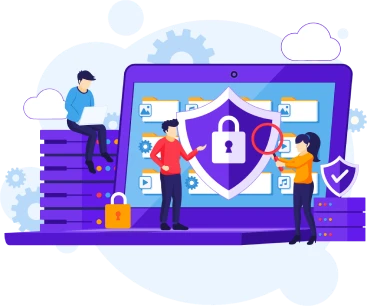
Cybersecurity is a major factor in deciding how outsourcing IT help desk responsibilities aligns with organizational risk management. Modern outsourced providers use secure support workflows, identity verification procedures, and advanced monitoring to protect sensitive company data. Because outsourced help desk teams often support hundreds of organizations, they maintain strict standards around data handling, incident response, and authentication. IT managers benefit from knowing that outsourced partners follow rigorous security practices, reducing the risk of internal errors, unauthorized access, and social engineering attacks.
Key Features to Expect From a Reliable Outsourced IT Help Desk Provider
Partnering with the right IT help desk outsourcing provider requires understanding what high-quality service actually looks like. Top providers typically offer:
- Multi-channel support (email, chat, phone, ticketing, remote assistance)
- 24/7 or extended-hour availability
- Tier-based escalation processes for complex issues
- Proactive device monitoring and alerting
- Documentation and reporting for audits and compliance needs
- Integration with endpoint security, patch management, and identity solutions
- Effective MSP help desk support goes far beyond fixing occasional laptop issues—it acts as the frontline defense of your organization’s IT ecosystem.
Cost Savings: One of the Biggest Advantages of Outsourcing IT Help Desk Operations
Many companies begin exploring outsourcing IT help desk services to reduce costs, but the long-term financial gains are even more compelling. Outsourcing reduces spend across:
- Recruiting and hiring IT staff
- Training and certifications
- IT support tools and software licensing
- Overtime and coverage gaps
- Employee turnover and backfill requirements
- The predictable monthly pricing of outsourced IT support simplifies budgeting and supports long-term planning, especially for organizations preparing to scale.
How Outsourcing IT Help Desk Improves Employee Productivity
Downtime is one of the most expensive problems faced by modern organizations. When employees wait for slow internal IT support, productivity stalls and frustration rises. External help desk teams shorten response times and, in many cases, resolve issues within minutes. Faster ticket resolution means employees experience fewer interruptions, which increases efficiency across the entire organization. Remote and hybrid teams also see major benefits because outsourced support can operate across time zones and provide access to remote troubleshooting tools.
Understanding the Differences Between Outsourced IT Help Desk and In-House Support
While in-house support teams understand internal systems deeply, they often struggle with availability and scalability. Outsourced IT support, on the other hand, offers:
- Round-the-clock coverage, compared to typical 9–5 internal teams
- Broader expertise across software, operating systems, and troubleshooting workflows
- Better documentation and structured ticket management
- More mature processes due to industry experience
- However, both models can coexist—many companies use hybrid help desk structures, where internal IT focuses on strategic initiatives while outsourced teams handle first-line and second-line support.
The Role of Outsourcing in Strengthening IT Infrastructure
Today’s IT environments are too complex to manage manually. Outsourced IT help desk services often include automation tools, remote monitoring platforms, and diagnostic systems that deliver proactive insights. These tools help detect device failures, security incidents, misconfigurations, and performance problems before users are affected. Outsourcing creates an environment where issues are identified and resolved proactively, improving reliability and reducing downtime. This technology-driven approach is especially helpful for growing businesses that lack advanced infrastructure or dedicated monitoring staff.
Outsourcing IT Help Desk for MSPs and IT Service Providers
MSPs often rely on outsourced help desk services to support their clients more effectively. Outsourcing allows MSPs to extend service hours, handle higher ticket volumes, and maintain SLAs without expanding internal staff. This partnership also makes MSP service delivery more predictable because external help desks provide standardized workflows, escalations, and documentation. For MSPs, outsourcing IT help desk responsibilities can become a strategic advantage, enabling them to focus on endpoint protection, patching, security audits, and network management while external teams handle day-to-day user support.
Best Practices for Businesses Outsourcing IT Help Desk Support
To successfully integrate outsourced IT support, organizations should follow a few best practices:
- Define expectations clearly through SLAs and measurable KPIs.
- Ensure the outsourced team has visibility into devices, systems, and security tools.
- Provide access to updated documentation and internal procedures.
- Plan an escalation structure for complex issues.
- Communicate regularly through reporting and review meetings.
- These steps ensure alignment, maintain accountability, and strengthen ongoing collaboration.
Common Misconceptions About Outsourcing IT Help Desk
Many IT managers hesitate to outsource because of misconceptions such as:
- “Outsourcing reduces control”—in reality, you gain visibility and metrics.
- “Security risks increase”—reputable providers actually strengthen protections.
- “Only small businesses outsource”—many enterprises rely heavily on outsourced tiers.
- “Users will dislike external teams”—professional help desks often deliver faster, friendlier support.
- Removing these misconceptions helps organizations evaluate outsourcing objectively and strategically.
How Outsourcing IT Help Desk Supports Business Growth
Growth requires agility. Outsourced IT help desk providers give businesses on-demand scalability. When your organization hires new employees, opens new offices, or expands remote operations, outsourced support teams adjust instantly. Scaling internal staff can take months. Scaling outsourced help desk services takes minutes. This ability to grow without operational bottlenecks allows technology leaders to accelerate transformation and focus on innovation.
Frequently Asked Questions
1. Is outsourcing IT help desk support secure?
Yes. Reputable providers follow strict security protocols, use identity verification workflows, and implement monitoring tools to protect sensitive data.
2. Does outsourcing cost less than hiring internal IT staff?
In most cases, outsourcing is significantly more cost-effective because it removes expenses associated with hiring, training, and maintaining in-house teams.
3. Can outsourced IT help desk teams handle complex technical issues?
Yes. Most outsourced teams include tier-based support, meaning advanced issues are escalated to highly trained specialists.
4. Will employees still receive personalized support?
Absolutely. Many outsourced help desks are designed to act as an extension of your internal IT team, delivering personalized service with structured workflows.
5. Can outsourcing IT help desk services work for hybrid or remote teams?
Yes. Outsourced support teams operate remotely and are available across time zones, making them ideal for distributed workforces.
Final Thoughts
Outsourcing IT help desk services is more than a cost-saving measure—it’s a strategic shift that gives businesses greater flexibility, stronger security, and improved productivity. By partnering with the right provider, organizations gain access to professional support teams that enhance day-to-day operations and reduce internal workload.
Take the next step toward smarter project execution — Start your free trial with ITarian to streamline workflows, automate repetitive tasks, and elevate your project delivery across every team.

 Loading...