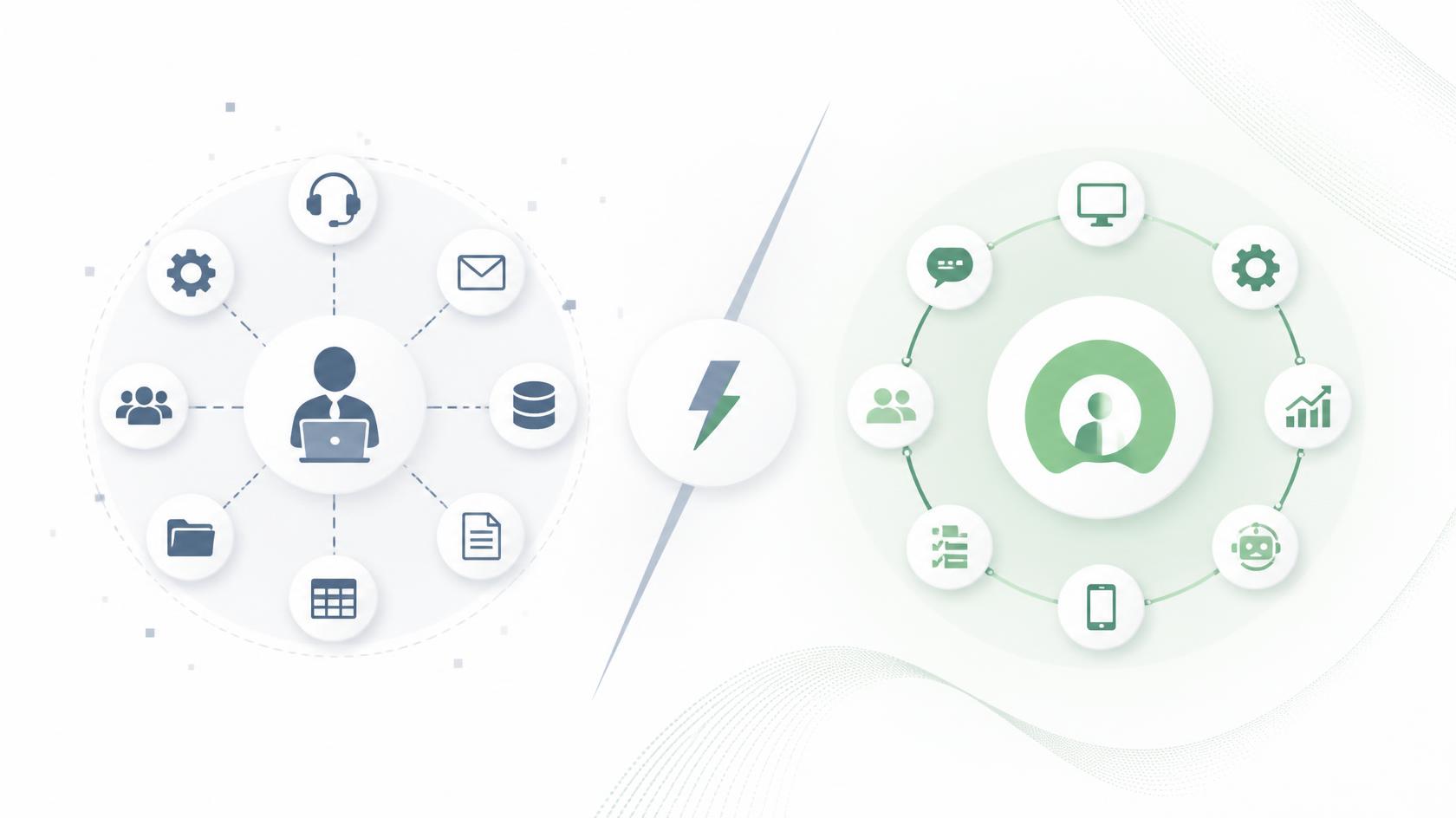
Is ITSM vs ServiceNow really a comparison between two competing solutions? Not exactly. The terms are often used together, but they describe different things. IT Service Management (ITSM) is a broad discipline for designing, delivering, managing, and improving technology services, while ServiceNow is a software platform that provides ITSM capabilities along with broader workflow functionality. Understanding this distinction helps IT managers, cybersecurity teams, CEOs, and business leaders avoid comparing a management approach directly with a product. More importantly, it helps organizations decide what kind of ITSM software, service desk software, automation, and service management capabilities they actually need.
What Does ITSM Mean
IT Service Management refers to the processes and practices organizations use to manage technology services throughout their lifecycle. Rather than focusing only on hardware or software, ITSM looks at how technology supports users and business outcomes.
Common ITSM processes include:
- Incident management
- Problem management
- Change management
- Service request management
- Knowledge management
- Configuration management
- Service-level management
- Asset management
- Continual service improvement
ITSM can be supported by many different software products. In other words, ITSM itself is not a specific vendor or application.
A company might establish an ITSM strategy and then select an IT service management platform that supports its workflows, team size, budget, security needs, and business goals.
What is ServiceNow
ServiceNow is a cloud-based platform that offers IT Service Management and other enterprise workflow capabilities. Its current ITSM offering brings areas such as incident, request, problem, and change management together on the ServiceNow AI Platform. ServiceNow also promotes AI-assisted automation, self-service, shared data, and workflow management as part of its current ITSM offering.
Therefore, the ITSM vs ServiceNow discussion becomes clearer when the two terms are placed in the correct categories:
ITSM = management discipline and processes
ServiceNow = a technology platform that can implement and automate ITSM processes
Organizations can follow ITSM practices without using ServiceNow. Likewise, organizations using ServiceNow still need well-designed processes, governance, ownership, and service objectives to achieve effective ITSM.
ITSM vs ServiceNow: The Core Differences
Understanding the fundamental differences can prevent confusion during software selection.
| Area | ITSM | ServiceNow |
|---|---|---|
| Type | Management discipline | Software platform |
| Purpose | Improve delivery and management of IT services | Digitize and automate service workflows |
| Vendor | Vendor-neutral | ServiceNow |
| Implementation | Can use many tools and methods | Uses the ServiceNow platform |
| Automation | Depends on selected technology | Built-in workflow and AI capabilities available |
| Scalability | Depends on processes and supporting tools | Designed for enterprise-scale workflows |
| Cost | Depends on chosen implementation | Based on selected ServiceNow packages and requirements |
The important point is that ITSM vs ServiceNow should not be treated like a traditional product-versus-product comparison.
A better business question is: Does ServiceNow provide the right platform for our ITSM requirements?
ITSM Processes That ServiceNow Supports
One reason people frequently search for ITSM vs ServiceNow is that ServiceNow has become closely associated with service management technology.
Its current ITSM portfolio supports multiple core service processes. ServiceNow describes its ITSM applications as covering end-to-end service delivery, including incident resolution, change management, service requests, asset-related capabilities, and continuous improvement.
Incident Management
Incident management focuses on restoring normal service as quickly as practical after a disruption.
ServiceNow’s Incident Management includes capabilities such as AI-assisted incident handling, routing, major incident workflows, self-service options, mobile access, notifications, and AIOps integration.
Regardless of the platform used, a good incident process should help teams:
- Record incidents consistently
- Categorize issues
- Set priorities
- Assign technicians
- Track SLAs
- Escalate critical incidents
- Record resolutions
Problem Management
Problem management looks beyond individual tickets to identify the underlying causes of repeated incidents.
For example, repeatedly restarting a failed service may resolve incidents temporarily. Problem management asks why the service keeps failing.
ServiceNow’s Problem Management supports root-cause workflows, known errors, remediation plans, dashboards, and links between problems and other ITSM processes.
Change Management
Businesses regularly change applications, infrastructure, security policies, and configurations.
Change management provides a controlled process for evaluating and implementing those modifications.
ServiceNow currently provides configuration options around change models, approval policies, risk and success scores, and DevOps change automation.
ITSM vs ServiceNow for Workflow Automation
Automation is another important area when evaluating ITSM vs ServiceNow.
Traditional ITSM processes can become inefficient when technicians manually categorize tickets, send notifications, update records, or route requests.
Modern ITSM software can automate many of these steps.
Common opportunities include:
- Automatically assigning incoming tickets.
- Escalating requests approaching SLA deadlines.
- Routing incidents based on category.
- Sending status notifications.
- Triggering approval workflows.
- Creating related records.
- Automating common service requests.
ServiceNow currently emphasizes AI and workflow automation across its ITSM platform, including AI assistance for routine requests and conversational self-service.
Automation, however, should improve a well-designed process rather than compensate for a poorly designed one.
Service Desk and Self-Service Capabilities
A modern service desk software platform should make it simple for users to request help and track progress.
Self-service can further reduce repetitive ticket volume.
Useful capabilities include:
- Service catalogs
- Knowledge bases
- User portals
- Automated request fulfillment
- Virtual assistants
- Ticket status tracking
- Approval workflows
ServiceNow supports multiple service channels and conversational self-service within its current ITSM offering. Its documentation also highlights mobile and web portal access for employees and agents.
The broader ITSM principle remains vendor-neutral: give users a consistent and efficient way to access services.
ITSM vs ServiceNow for Different Business Sizes
The right technology depends heavily on organizational complexity.
Small Businesses
Smaller organizations often prioritize simplicity, fast deployment, manageable administration, and predictable costs.
They may not need a highly complex enterprise platform to implement basic ITSM practices.
Core requirements might include:
- Ticketing
- Asset visibility
- Knowledge management
- SLA tracking
- Remote support
- Basic automation
Mid-Sized Organizations
Growing companies typically require stronger integrations and more automation.
They may need incident, problem, change, asset, and request management combined with reporting and workflow customization.
Large Enterprises
Large organizations often operate across many departments, locations, and technology environments.
ServiceNow is positioned around scalable enterprise service workflows and currently offers multiple ITSM packages. Its pricing page lists Foundation, Advanced, and Prime options and directs buyers to request custom pricing rather than publishing a single universal price.
Therefore, organizations evaluating ITSM vs ServiceNow should compare actual business requirements instead of assuming that one platform suits every environment.
Benefits of a Strong ITSM Strategy
Regardless of the selected platform, effective ITSM can improve the way technology teams serve the business.
Faster Service Delivery
Standard workflows make responsibilities clearer and reduce unnecessary delays.
Better User Experience
Employees gain predictable ways to request services and report issues.
Greater Accountability
Ticket histories, ownership, SLA tracking, and reports make performance easier to measure.
Reduced Repeated Problems
Problem management encourages teams to investigate root causes rather than repeatedly fixing symptoms.
Stronger Change Control
Structured change processes help organizations assess risk before modifying critical services.
Improved Decision-Making
Reliable service data helps managers identify bottlenecks, recurring incidents, resource requirements, and improvement opportunities.
Potential Challenges When Implementing ServiceNow
A balanced ITSM vs ServiceNow evaluation should consider implementation effort as well as features.
An extensive platform can require planning, configuration, governance, training, integration work, and ongoing administration.
Potential considerations include:
- Implementation complexity
- Process redesign
- Integration requirements
- User training
- Workflow customization
- Data migration
- Governance
- Licensing and package selection
- Long-term administration
These factors do not make a platform unsuitable. They simply need to be included in the business case.
Over-customization can also create unnecessary complexity. Wherever possible, organizations should first determine whether standardized workflows meet the requirement before introducing extensive custom processes.
Choosing an ITSM Platform
Instead of focusing only on ITSM vs ServiceNow, businesses should create a structured list of requirements.
Define Your Essential Processes
Determine whether you require:
- Incident management
- Problem management
- Change management
- Asset management
- Knowledge management
- Service requests
- SLA management
- Configuration management
Evaluate Automation
Identify repetitive activities consuming technician time.
Then determine which workflows could be safely automated.
Examine Integrations
Your IT service management platform may need to connect with monitoring, endpoint management, identity, security, collaboration, or business applications.
Consider Reporting
Look for visibility into metrics such as:
- Mean time to resolution
- First-contact resolution
- SLA compliance
- Ticket backlog
- Reopened incidents
- User satisfaction
- Change success rate
Calculate Total Cost
Do not evaluate software solely on its initial subscription price.
Consider implementation, administration, training, integration, customization, and maintenance.
Actionable Tips for Better ITSM Results
Technology alone will not create mature service management.
Start with a few practical improvements:
- Document current workflows. Identify unnecessary steps before automating them.
- Create clear ownership. Every process needs accountable owners.
- Define measurable SLAs. Use realistic targets tied to business needs.
- Build useful knowledge. Turn repeated resolutions into searchable articles.
- Automate repetitive tasks. Focus first on high-volume, low-risk activities.
- Review service metrics regularly. Look for trends rather than isolated numbers.
- Collect user feedback. Service quality should reflect the employee experience.
- Improve continuously. Treat ITSM as an evolving operating model.
Frequently Asked Questions
Q1: What is the main difference between ITSM and ServiceNow?
The main ITSM vs ServiceNow difference is that ITSM is a discipline for managing technology services, while ServiceNow is a platform that provides software capabilities for implementing ITSM and other workflows.
Q2: Is ServiceNow the same as ITSM?
No. ServiceNow provides an ITSM product, but ITSM itself is vendor-neutral. Organizations can implement ITSM principles using many different tools.
Q3: Can a company use ITSM without ServiceNow?
Yes. A business can establish incident, problem, change, request, and other ITSM processes using alternative software platforms or internal systems.
Q4: Does ServiceNow include incident and problem management?
Yes. ServiceNow’s current ITSM offering includes incident management, while problem management is available within its broader ITSM packages and applications.
Q5: Which is better in an ITSM vs ServiceNow comparison?
There is no direct winner because they are different categories. Organizations should first define their ITSM requirements and then determine whether ServiceNow or another platform provides the best combination of capabilities, complexity, scalability, and cost.
Final Thoughts
The ITSM vs ServiceNow comparison becomes straightforward once the terminology is clear. ITSM defines the processes and principles organizations use to deliver and improve technology services. ServiceNow is one platform that can help organizations digitize, automate, and scale those processes.
The right decision starts with the business rather than the product. Define your service goals, identify inefficient workflows, determine essential integrations, evaluate automation opportunities, and calculate the full cost of ownership. Whether you select ServiceNow or another ITSM software solution, strong processes and continuous improvement will ultimately determine the quality of service users receive.

 Loading...