Optimizing IT Performance with Service Mapping
Updated on March 18, 2026, by ITarian

What happens when a critical business application fails but IT teams cannot quickly identify the root cause? In many organizations, digital services rely on complex infrastructures that include servers, networks, cloud platforms, and databases. Without a clear understanding of how these components interact, troubleshooting becomes difficult. IT service mapping helps organizations visualize relationships between infrastructure components and the services they support.
For cybersecurity professionals, IT managers, and business leaders, IT service mapping provides a clear view of how technology systems support business operations. By mapping dependencies across infrastructure, organizations can detect risks faster, reduce downtime, and improve operational decision-making.
As digital services continue to grow in complexity, IT service mapping has become an essential capability for maintaining resilient and secure IT environments.
Understanding the Concept of IT Service Mapping
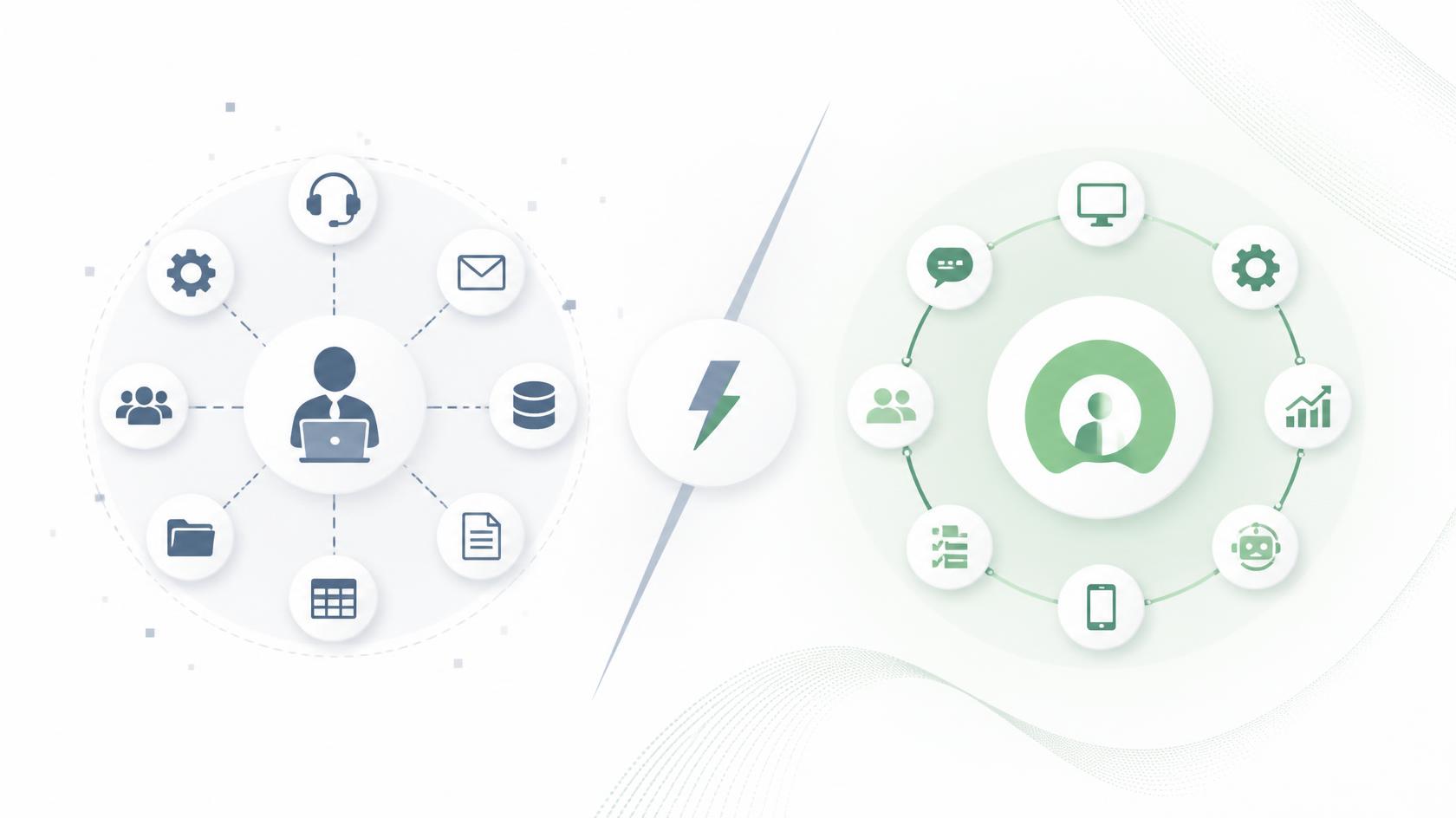
IT service mapping is the process of identifying and visualizing the relationships between IT infrastructure components and the business services they support. This process creates a detailed map showing how applications, servers, databases, and network resources interact to deliver digital services.
In a typical enterprise environment, a single application may depend on dozens of infrastructure components. If one component fails, the entire service may be disrupted.
IT service mapping helps administrators understand these dependencies by creating a visual representation of service architecture.
These maps often include:
-
Applications and services
-
Servers and virtual machines
-
Network infrastructure
-
Databases and storage systems
-
Cloud services and integrations
By mapping these relationships, IT teams gain visibility into how infrastructure supports business processes.
Why IT Service Mapping Is Essential for Modern Organizations
Modern IT environments are highly interconnected. Applications depend on multiple services, and infrastructure often spans on-premise data centers and cloud environments.
Without IT service mapping, organizations may face several challenges:
-
Limited visibility into service dependencies
-
Slow troubleshooting processes
-
Increased downtime during incidents
-
Difficulty identifying infrastructure vulnerabilities
IT service mapping addresses these challenges by providing a structured view of the entire service ecosystem.
This visibility enables IT teams to identify potential risks and respond to incidents more efficiently.
Key Benefits of IT Service Mapping
Organizations that implement IT service mapping gain several operational advantages.
Faster Incident Resolution
When a service fails, administrators can quickly identify the infrastructure components responsible.
This reduces troubleshooting time and accelerates service restoration.
Improved Infrastructure Visibility
IT service mapping provides a clear view of how applications interact with underlying infrastructure.
This transparency improves operational awareness.
Better Risk Management
Understanding system dependencies helps organizations identify potential points of failure.
IT teams can proactively strengthen vulnerable areas of infrastructure.
Enhanced Decision-Making
Service maps provide valuable insights for planning infrastructure upgrades, system migrations, and capacity expansion.
Business leaders can make informed technology decisions based on accurate data.
IT Service Mapping and Cybersecurity
Cybersecurity teams benefit significantly from IT service mapping. Security monitoring becomes more effective when teams understand how systems connect and interact.
For example, if a security alert occurs on a server, IT service mapping helps administrators determine which applications and services may be affected.
Security advantages include:
-
Faster identification of affected systems during cyber incidents
-
Improved vulnerability management
-
Better monitoring of critical infrastructure components
-
Enhanced incident response coordination
By understanding infrastructure dependencies, organizations can respond to threats more effectively.
Supporting Digital Transformation With IT Service Mapping
Digital transformation initiatives often involve cloud adoption, application modernization, and distributed infrastructures.
As organizations migrate services to the cloud, maintaining visibility across systems becomes increasingly challenging.
IT service mapping helps maintain operational control during transformation initiatives.
Benefits include:
-
Visibility into hybrid cloud environments
-
Identification of service dependencies during migrations
-
Improved change management processes
-
Reduced risk during infrastructure upgrades
With accurate service maps, organizations can implement technology changes with greater confidence.
IT Service Mapping for Operational Efficiency
Operational efficiency is a key priority for IT teams managing large infrastructures.
IT service mapping supports efficiency by providing insights into system relationships and performance dependencies.
For example, administrators can quickly identify which systems support a critical business application.
If an issue occurs, technicians can focus on the specific infrastructure components involved.
Operational benefits include:
-
Reduced troubleshooting time
-
Improved collaboration between IT teams
-
Better resource allocation
-
More efficient infrastructure planning
These improvements help organizations maintain stable and reliable IT services.
Integrating IT Service Mapping With IT Management Tools
IT service mapping platforms often integrate with broader IT management ecosystems.
Common integrations include:
-
Remote monitoring and management platforms
-
Endpoint management systems
-
Network monitoring tools
-
IT service management platforms
-
Security monitoring solutions
These integrations allow service maps to update automatically as infrastructure changes.
For example, when new servers or applications are deployed, the service map can update dynamically.
Automated mapping ensures that infrastructure documentation remains accurate and current.
Best Practices for Implementing IT Service Mapping
Organizations should follow several best practices when implementing IT service mapping initiatives.
First, identify the most critical business services that depend on IT infrastructure.
Second, gather detailed information about infrastructure components and system relationships.
Third, use automated discovery tools to map dependencies accurately.
Fourth, ensure that service maps remain updated as infrastructure evolves.
Finally, integrate service mapping tools with monitoring and security platforms to enhance visibility.
Following these practices helps organizations maintain accurate and useful service maps.
Challenges Organizations May Encounter
Although IT service mapping offers significant benefits, organizations may face challenges during implementation.
One challenge involves identifying all infrastructure dependencies in large environments.
Legacy systems may lack documentation, making mapping more difficult.
Another challenge involves maintaining updated maps as infrastructure changes frequently.
Organizations must also ensure that service mapping tools integrate effectively with existing IT management systems.
Addressing these challenges requires careful planning and continuous monitoring.
The Future of IT Service Mapping
The future of IT service mapping will be shaped by automation and artificial intelligence.
Advanced mapping platforms are beginning to use AI to detect infrastructure relationships automatically.
Machine learning algorithms can analyze system behavior to identify service dependencies.
Future capabilities may include:
-
Automated discovery of new infrastructure components
-
Real-time service mapping updates
-
Predictive impact analysis for infrastructure changes
-
AI-driven root cause analysis during incidents
These innovations will enable IT teams to maintain deeper visibility into increasingly complex environments.
Organizations that adopt advanced service mapping technologies will gain a competitive advantage in infrastructure management.
Frequently Asked Questions
1. What is IT service mapping?
IT service mapping is the process of identifying and visualizing relationships between IT infrastructure components and the business services they support.
2. Why is IT service mapping important for IT operations?
It improves visibility into infrastructure dependencies, allowing IT teams to troubleshoot issues and manage services more effectively.
3. How does IT service mapping improve cybersecurity?
By identifying system relationships, security teams can quickly determine which services may be affected during a cyber incident.
4. Can IT service mapping help reduce downtime?
Yes. Service maps allow administrators to identify affected components quickly and restore services faster.
5. Is IT service mapping useful for cloud environments?
Absolutely. It helps organizations understand dependencies across hybrid and cloud infrastructures.
Final Thoughts
IT service mapping provides the visibility organizations need to manage complex digital infrastructures effectively. By identifying relationships between applications, servers, networks, and services, IT teams gain the insights required to troubleshoot incidents faster, improve cybersecurity monitoring, and optimize infrastructure performance. As technology environments continue to expand, service mapping will become increasingly important for maintaining resilient and reliable IT operations.
Strengthen your infrastructure oversight and modernize your IT operations — Secure your infrastructure better — launch your free ITarian trial

 Loading...