Strengthening Business Operations with IT Help Desk Support
Updated on December 26, 2025, by ITarian

When technology stops working, productivity slows, frustration rises, and security risks increase. That reality makes IT help desk support one of the most critical functions in any modern organization. From resolving everyday user issues to responding to security incidents, IT help desk support sits at the intersection of business continuity, employee experience, and cyber resilience. For IT managers, cybersecurity leaders, and executives, understanding how effective IT help desk support works—and how to optimize it—can directly impact operational efficiency and risk management. In today’s digitally dependent workplaces, IT help desk support is no longer just a reactive service; it is a strategic capability that supports growth, security, and long-term success.
What Is IT Help Desk Support and Why It Matters
IT help desk support refers to the centralized function responsible for assisting users with technology-related issues, requests, and incidents. This includes troubleshooting hardware and software problems, managing access requests, resolving network connectivity issues, and guiding users through technical processes. At its core, IT help desk support ensures that employees can work without unnecessary interruptions caused by technology failures.
The importance of IT help desk support goes beyond fixing broken systems. A well-structured help desk improves productivity by reducing downtime, enhances cybersecurity by enforcing access controls, and strengthens user trust in IT operations. For leadership teams, reliable IT help desk support provides visibility into recurring issues, system weaknesses, and user behavior patterns that inform better decision-making.
The Role of IT Help Desk Support in Modern Organizations
As organizations adopt cloud services, remote work models, and complex software ecosystems, the role of IT help desk support continues to expand. Help desks now support distributed teams across multiple locations, time zones, and device types. This shift requires IT help desk support to be more proactive, scalable, and security-focused than ever before.
Modern IT help desk support teams act as the first line of defense against cyber threats. They handle password resets, suspicious login reports, phishing incidents, and device security issues. By responding quickly and consistently, IT help desk support reduces the window of opportunity for attackers while maintaining smooth business operations.
Core Functions of IT Help Desk Support
Effective IT help desk support typically covers a wide range of responsibilities that touch nearly every part of an organization’s technology environment. These functions are essential for maintaining stability and user satisfaction.
-
Incident management for hardware, software, and network issues
-
Service request fulfillment such as account provisioning and access changes
-
User onboarding and offboarding support
-
Troubleshooting endpoint and application problems
-
Escalation of complex issues to specialized IT teams
When these functions are clearly defined and supported by proper tools, IT help desk support becomes predictable, measurable, and easier to optimize.
IT Help Desk Support and Cybersecurity Alignment
Cybersecurity is no longer the responsibility of a single team. IT help desk support plays a critical role in enforcing security policies and responding to threats at the user level. Many security incidents begin with user actions, such as clicking malicious links or using weak passwords. IT help desk support teams are often the first to receive reports of these events.
By integrating cybersecurity processes into IT help desk support workflows, organizations can improve detection and response times. Help desk teams can verify user identities, enforce password policies, and escalate suspicious activity to security operations teams. This alignment reduces risk while maintaining a positive user experience.
Benefits of Strong IT Help Desk Support
Organizations that invest in structured, well-managed IT help desk support experience measurable benefits across operations, security, and employee satisfaction. These advantages extend beyond the IT department and impact the entire business.
-
Reduced downtime and faster issue resolution
-
Improved employee productivity and morale
-
Better visibility into IT performance and recurring problems
-
Stronger enforcement of security and compliance policies
-
Scalable support for growing and remote teams
For executives, these benefits translate into lower operational costs and reduced exposure to technology-related risks.
Types of IT Help Desk Support Models
IT help desk support can be delivered through different models depending on organizational size, industry, and internal capabilities. Choosing the right model helps balance cost, control, and service quality.
Internal IT help desk support teams are common in larger organizations that require direct control over systems and data. Outsourced IT help desk support is often used by small to mid-sized businesses seeking cost efficiency and 24/7 coverage. Hybrid models combine internal oversight with external support resources to handle peak demand or specialized tasks.
Each model has trade-offs, but the effectiveness of IT help desk support ultimately depends on clear processes, skilled personnel, and the right technology.
Best Practices for Optimizing IT Help Desk Support
To deliver consistent value, IT help desk support must be continuously refined. Best practices help organizations improve efficiency, reduce ticket backlogs, and enhance service quality without increasing costs.
-
Define clear service-level expectations and response times
-
Use ticket categorization and prioritization consistently
-
Maintain a searchable knowledge base for common issues
-
Train help desk staff on security awareness and communication skills
-
Regularly review metrics and user feedback
Applying these practices helps IT help desk support teams move from reactive problem-solving to proactive service delivery.
IT Help Desk Support Metrics That Matter
Measuring performance is essential for improving IT help desk support. Metrics provide insights into workload, efficiency, and user satisfaction. However, tracking the right metrics is more important than tracking many metrics.
Commonly used IT help desk support metrics include first response time, resolution time, ticket volume by category, and user satisfaction scores. For leadership teams, these metrics reveal trends that guide staffing decisions, technology investments, and process improvements.
IT Help Desk Support in Remote and Hybrid Work Environments
Remote and hybrid work models have reshaped how IT help desk support operates. Employees now rely on home networks, personal devices, and cloud-based tools, increasing the variety of issues help desks must handle. At the same time, users expect faster, more flexible support options.
Modern IT help desk support adapts by offering multiple communication channels, including email, chat, and self-service portals. Secure remote access tools allow technicians to troubleshoot devices regardless of location. These capabilities ensure consistent support while maintaining security standards.
Choosing Tools to Enhance IT Help Desk Support
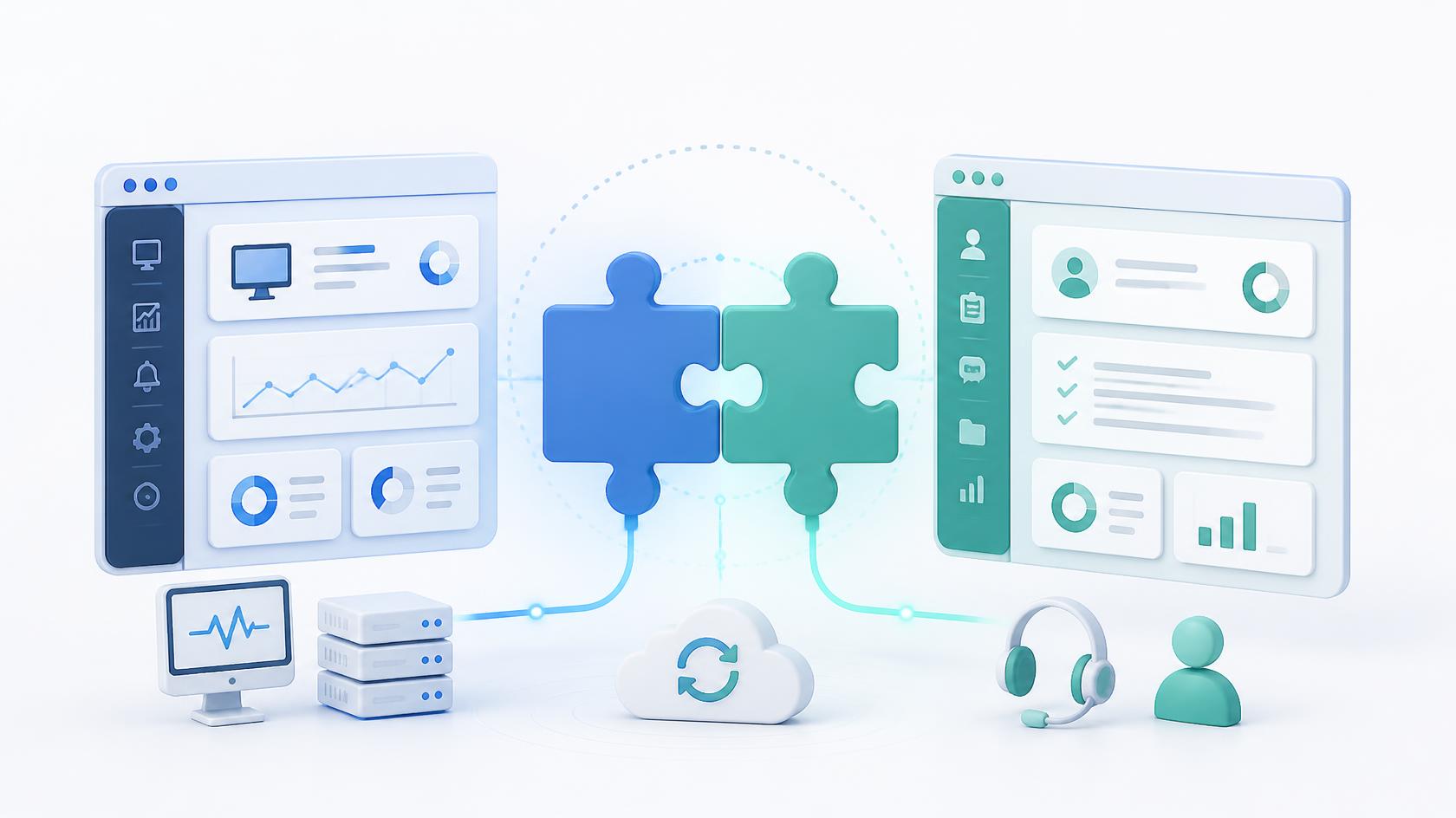
Technology plays a critical role in scaling IT help desk support effectively. The right tools streamline ticket management, automate routine tasks, and provide visibility into support operations. For IT managers, selecting tools that integrate with existing systems is key to avoiding complexity.
Endpoint management, monitoring, and automation platforms can significantly enhance IT help desk support by enabling proactive issue detection and faster resolution. When tools are aligned with help desk workflows, teams spend less time on manual tasks and more time delivering value.
Common Challenges in IT Help Desk Support
Despite its importance, IT help desk support often faces challenges that limit effectiveness. High ticket volumes, limited staffing, and unclear processes can lead to slow responses and user dissatisfaction. Security incidents can further strain resources if not handled efficiently.
Addressing these challenges requires a combination of process improvement, training, and technology investment. Organizations that treat IT help desk support as a strategic function rather than a cost center are better positioned to overcome these obstacles.
The Future of IT Help Desk Support
The future of IT help desk support is shaped by automation, artificial intelligence, and deeper integration with security operations. Automated workflows can handle repetitive requests, freeing human agents to focus on complex issues. AI-driven insights can identify patterns and predict problems before users report them.
As digital environments become more complex, IT help desk support will continue to evolve into a central hub for operational intelligence, security enforcement, and user enablement. Organizations that invest early in modern help desk capabilities gain a competitive advantage in resilience and agility.
Frequently Asked Questions About IT Help Desk Support
1. What does IT help desk support typically cover?
IT help desk support covers troubleshooting, service requests, access management, and user assistance for hardware, software, and network issues.
2. How does IT help desk support improve cybersecurity?
IT help desk support enforces security policies, handles incident reports, and serves as a first response point for potential security threats.
3. Is IT help desk support suitable for small businesses?
Yes, IT help desk support scales well for small businesses, especially when supported by automation and centralized management tools.
4. What skills are important for IT help desk support staff?
Technical knowledge, communication skills, problem-solving ability, and security awareness are essential for effective IT help desk support.
5. How can organizations measure IT help desk support success?
Success is measured using metrics such as response time, resolution time, ticket volume trends, and user satisfaction feedback.
Final Thoughts
IT help desk support is far more than a troubleshooting function. It is a foundational service that supports productivity, security, and user confidence across the organization. As technology environments grow more complex, the value of structured, well-managed IT help desk support becomes even more apparent. For IT leaders and executives, investing in the right processes and tools ensures that help desk support evolves alongside business needs.
Take the next step toward stronger, more efficient IT operations — Begin your free ITarian trial today and empower your IT help desk support with centralized management, automation, and enhanced security visibility.

 Loading...